Knitted Domains: Mediating Housing Inequality Through Urban Design
Year: 2025
Site: Mumbai, Maharashtra, India
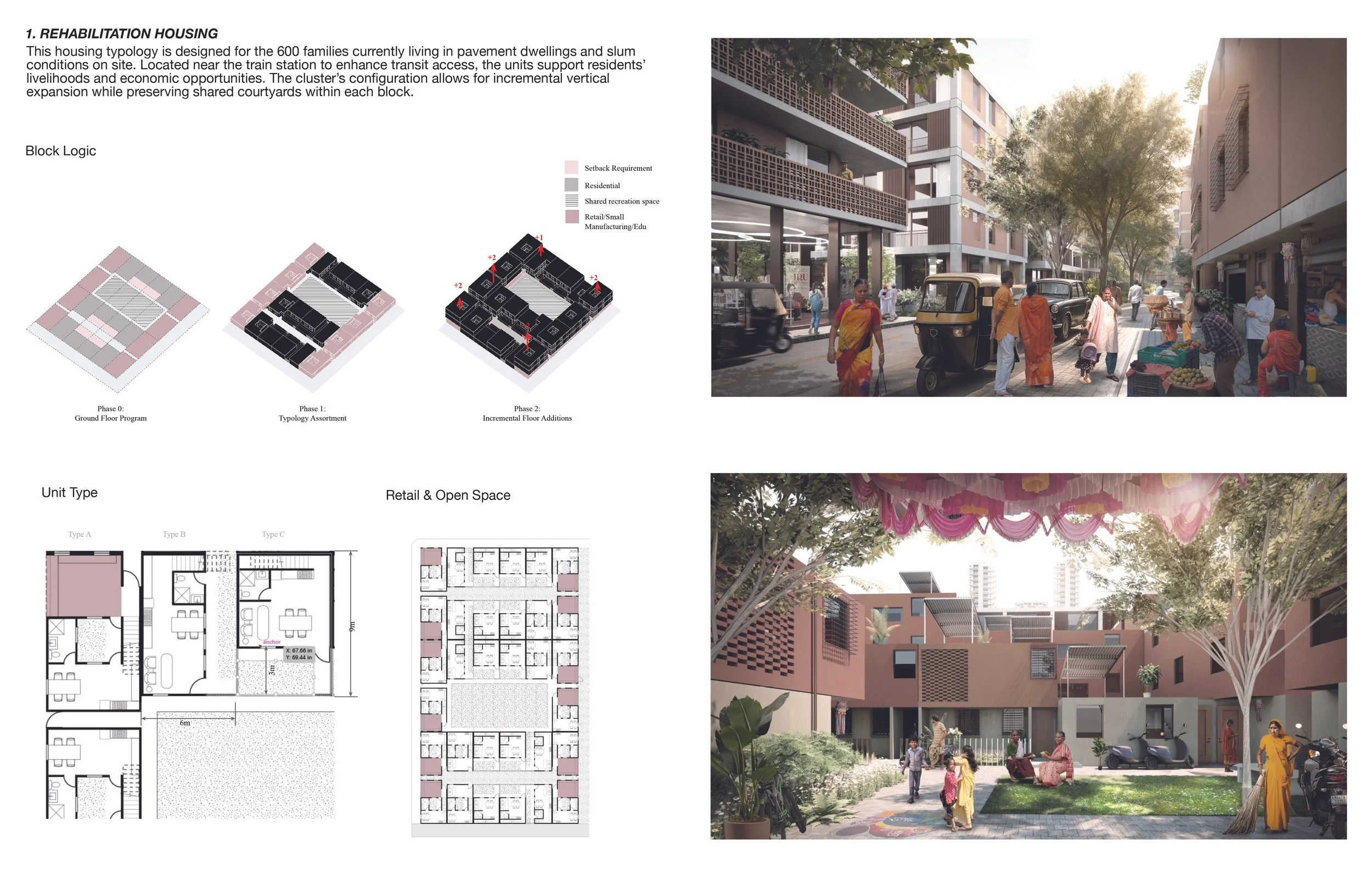
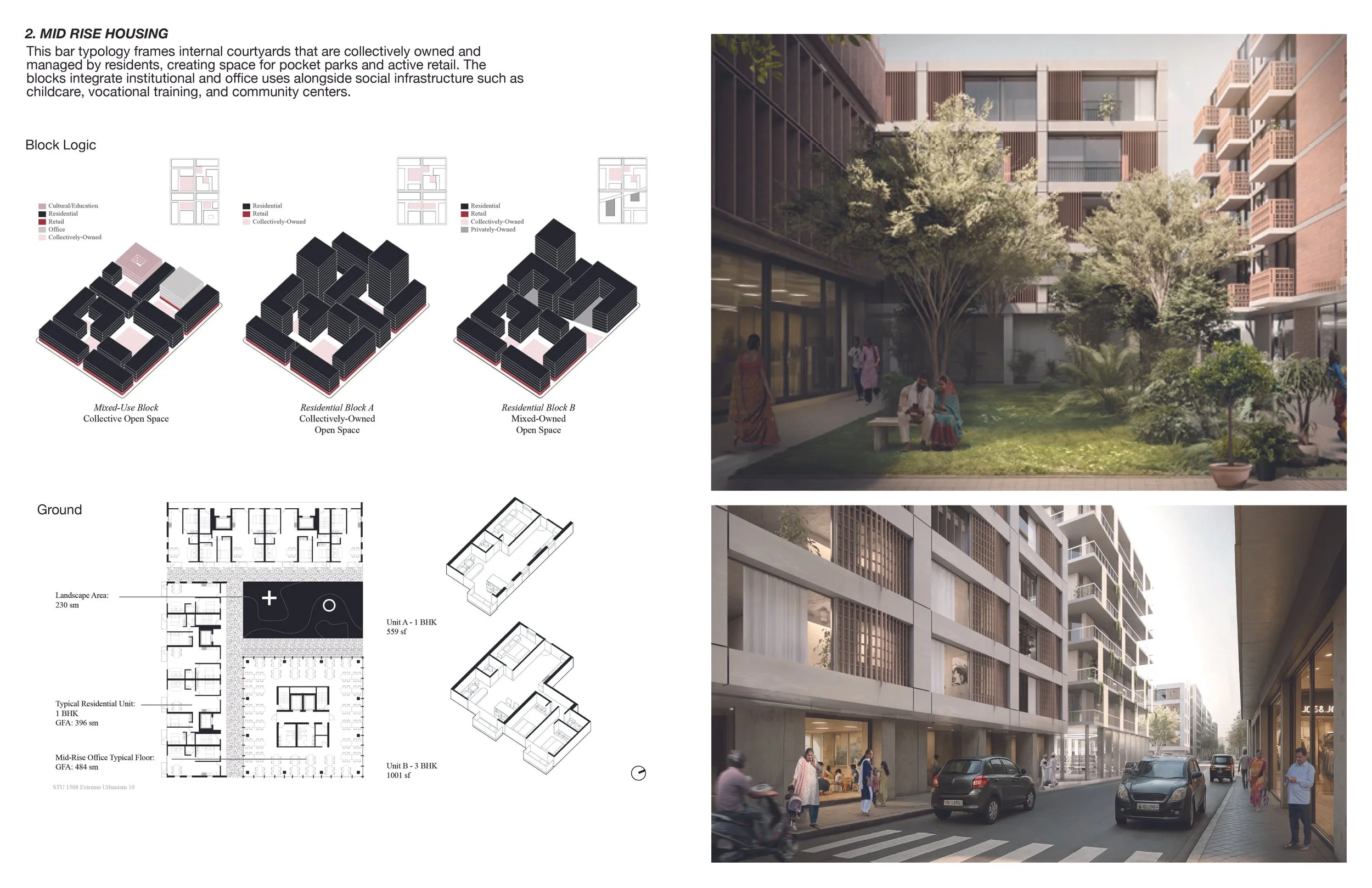
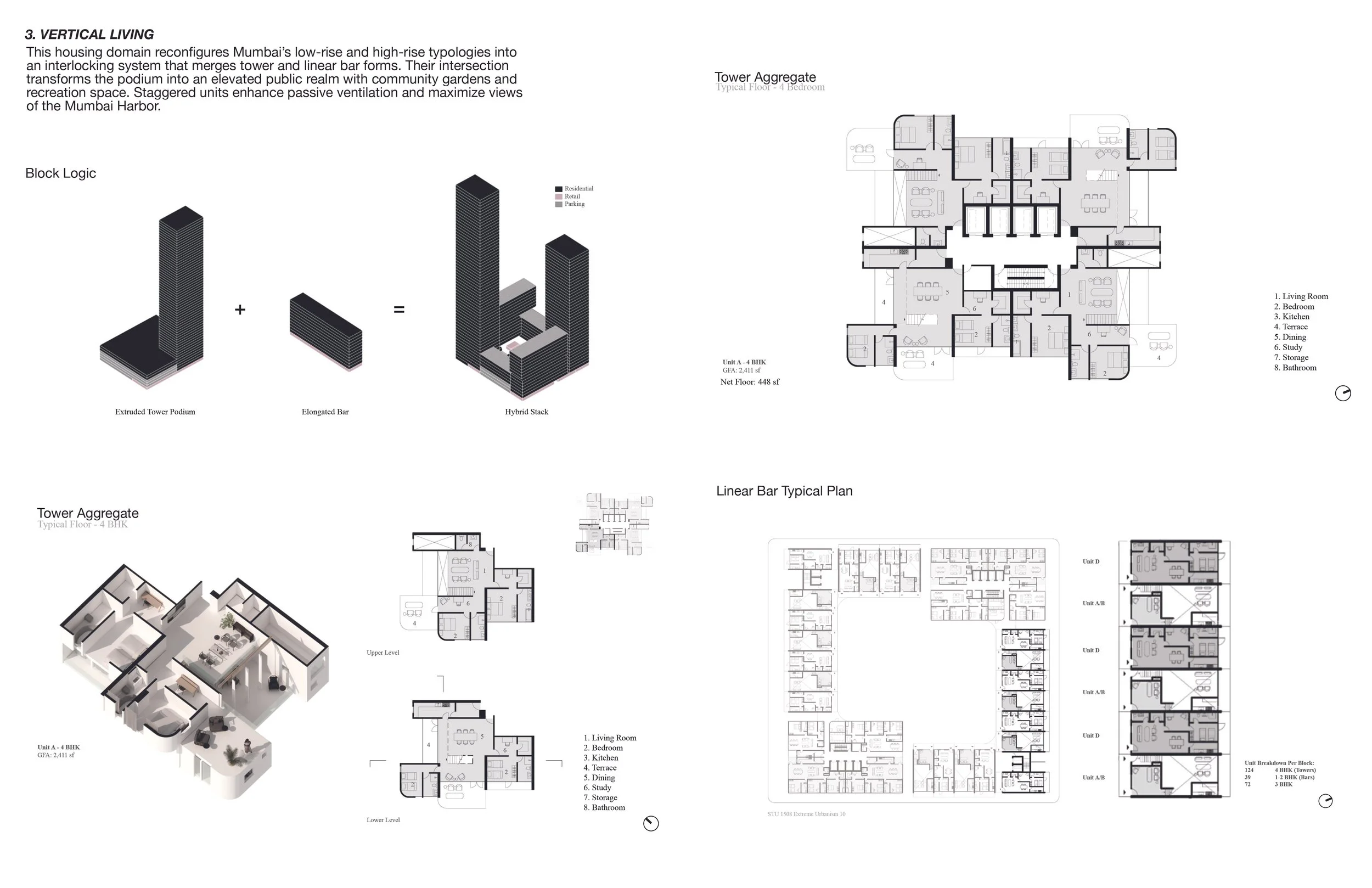
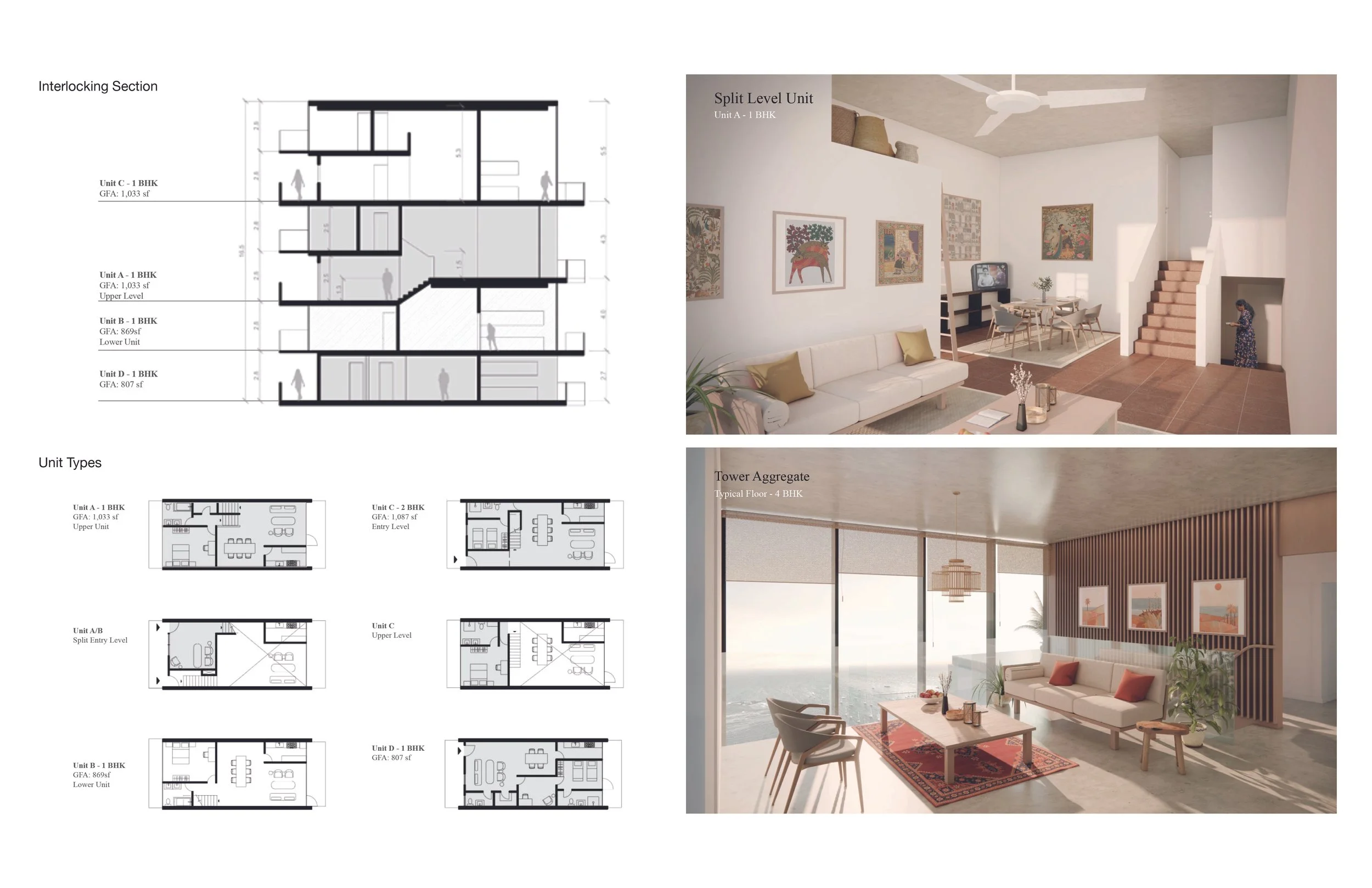
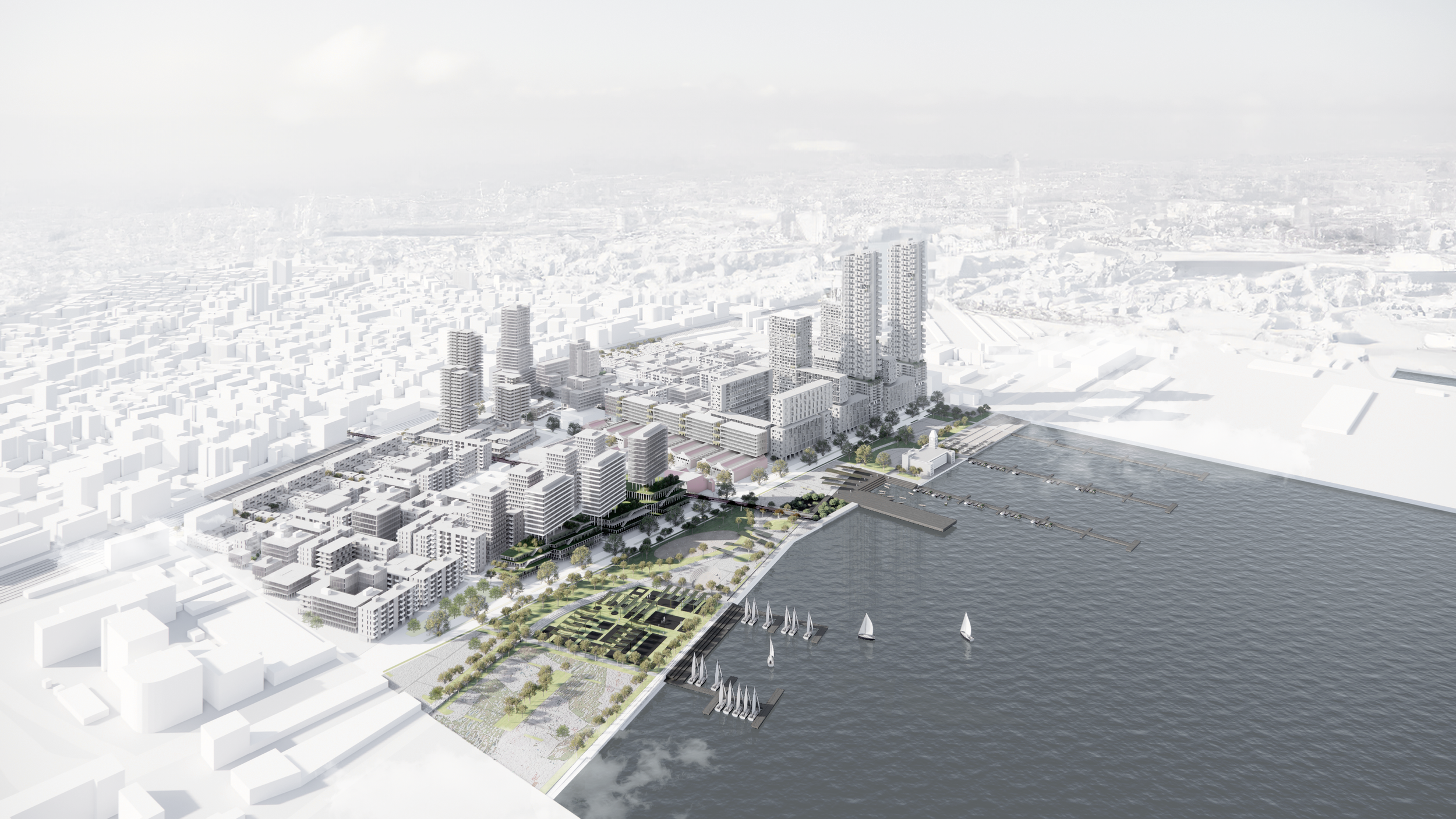
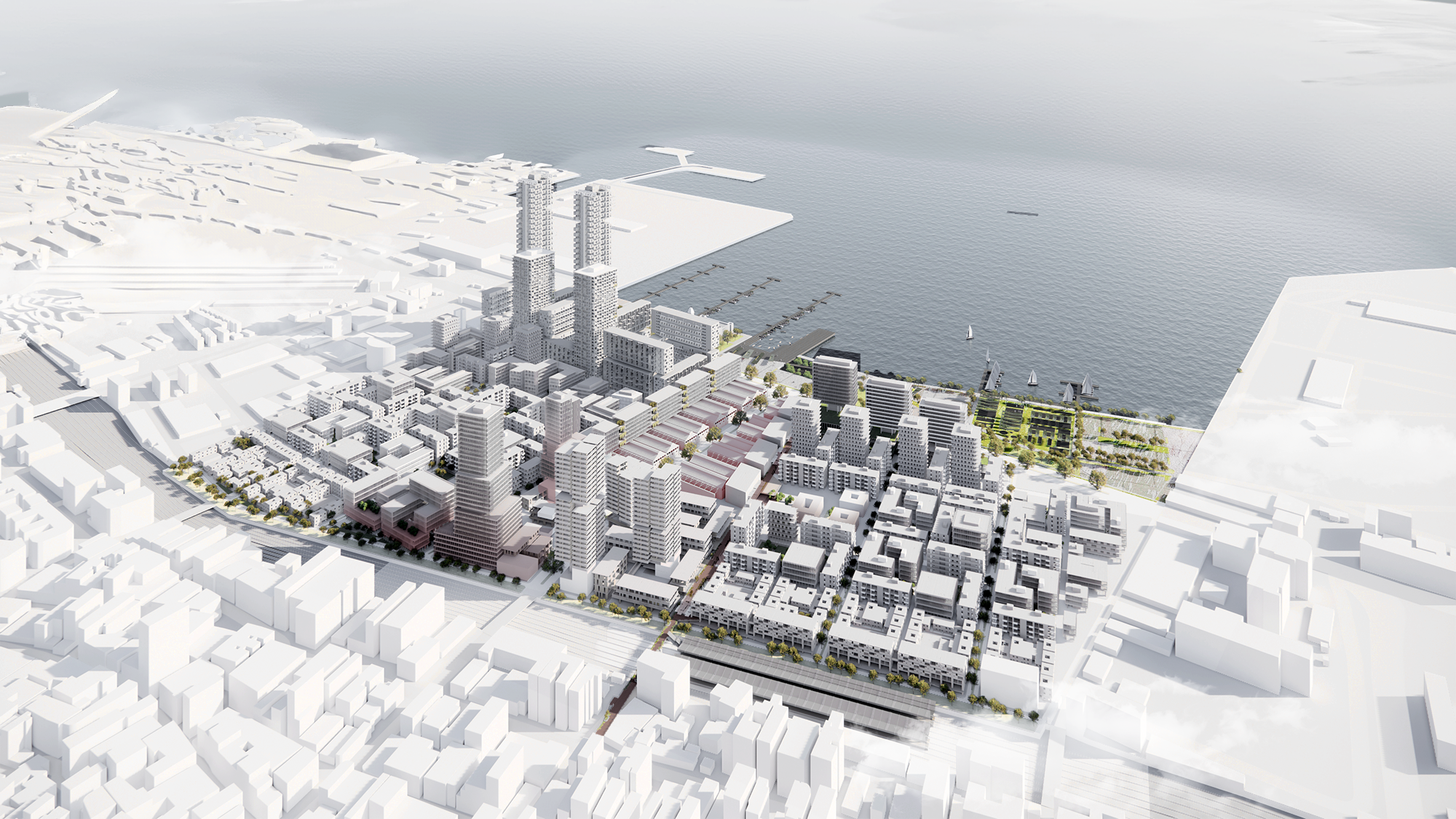
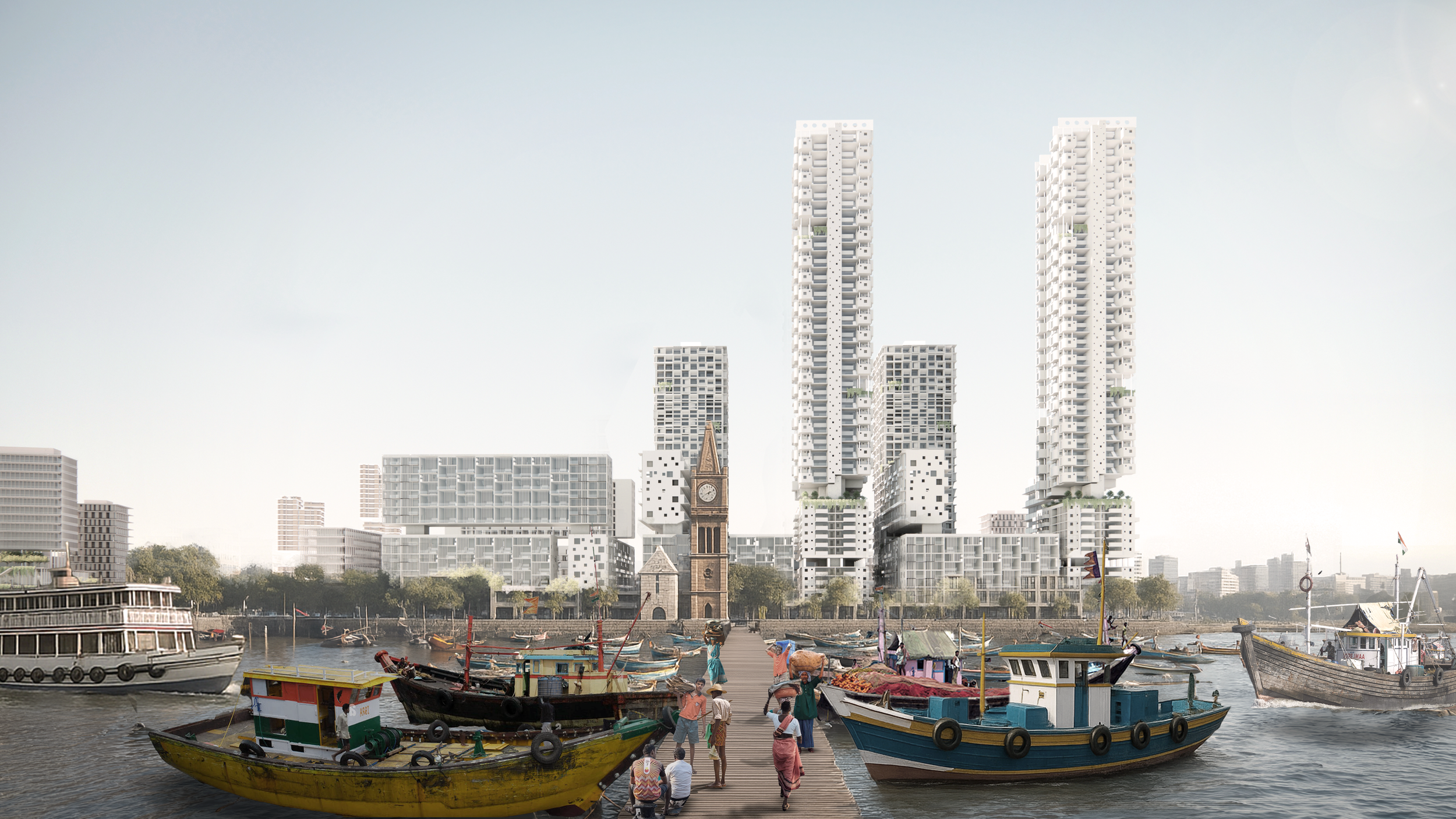
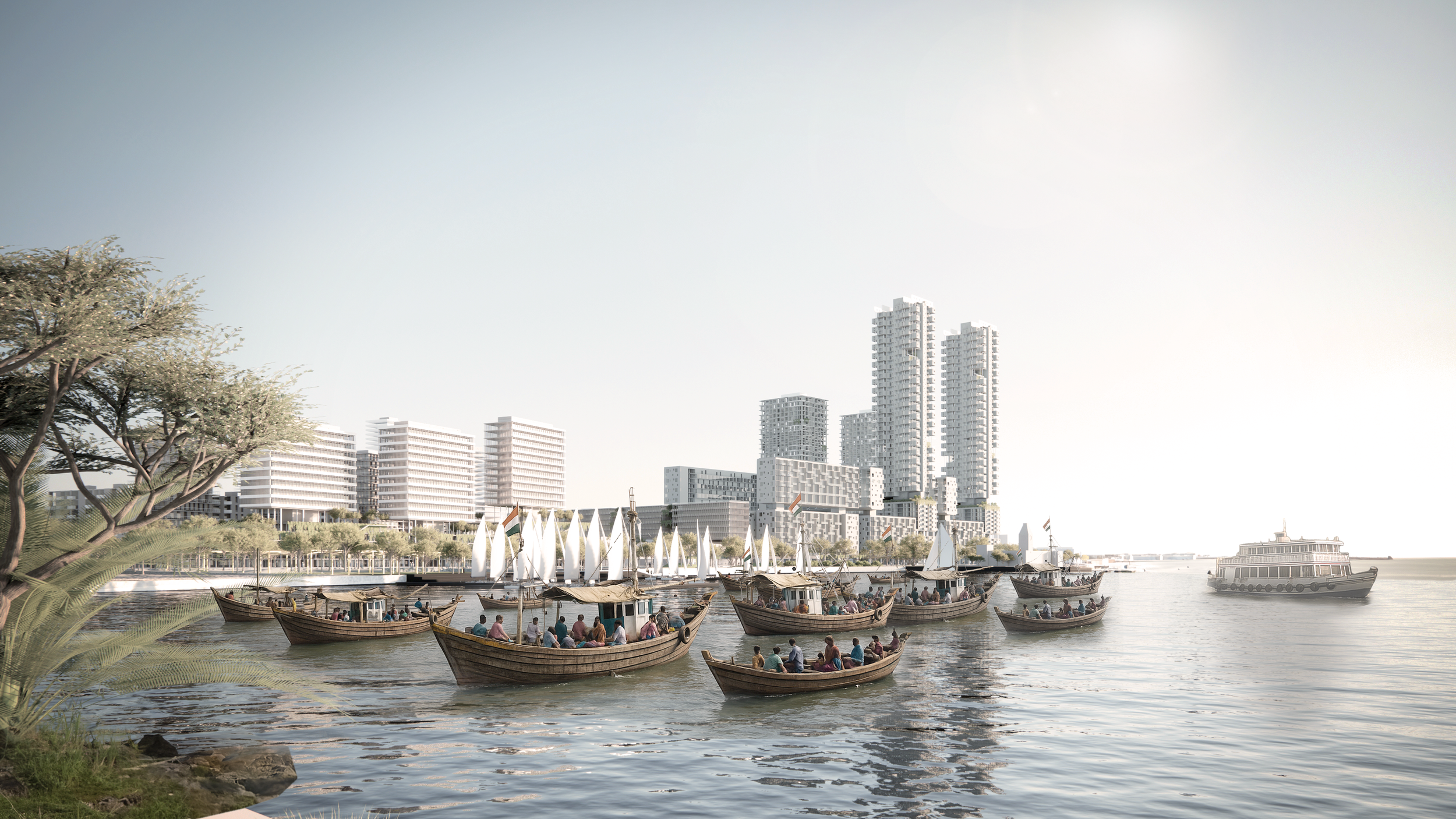
This project reimagines Mumbai’s eastern waterfront as a woven landscape that bridges extremes of urban form, social groups, and ecological networks, creating a microcosm where the city’s diverse typologies are integrated through layered urban design strategies. Drawing on the intensity of Mumbai’s hyper mixed-use environments, the proposal establishes a framework that facilitates urban evolutions by reconfiguring a spectrum of dwellings, spaces for commerce, and public amenities, using open space to knit diverse forms of interaction.
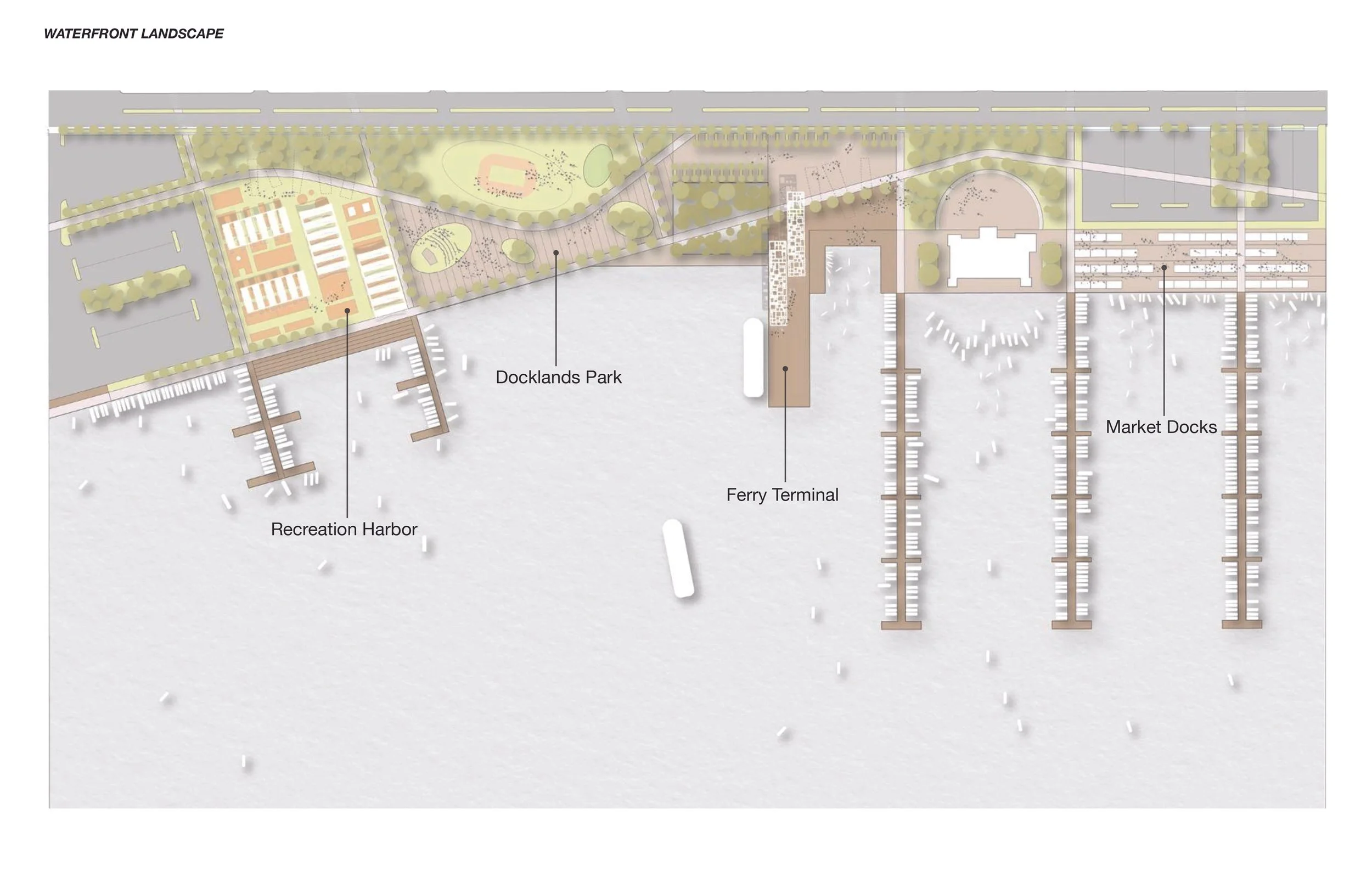
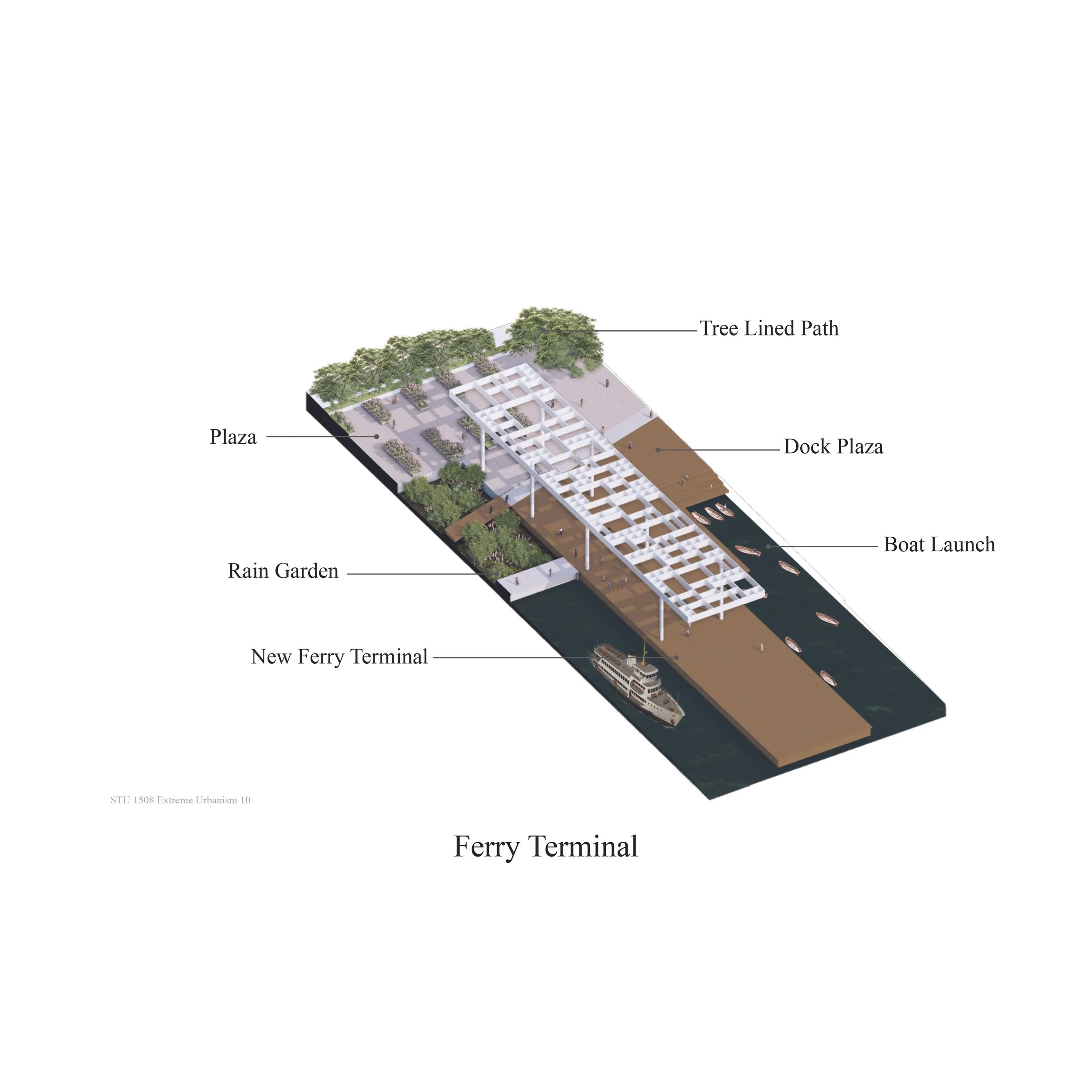
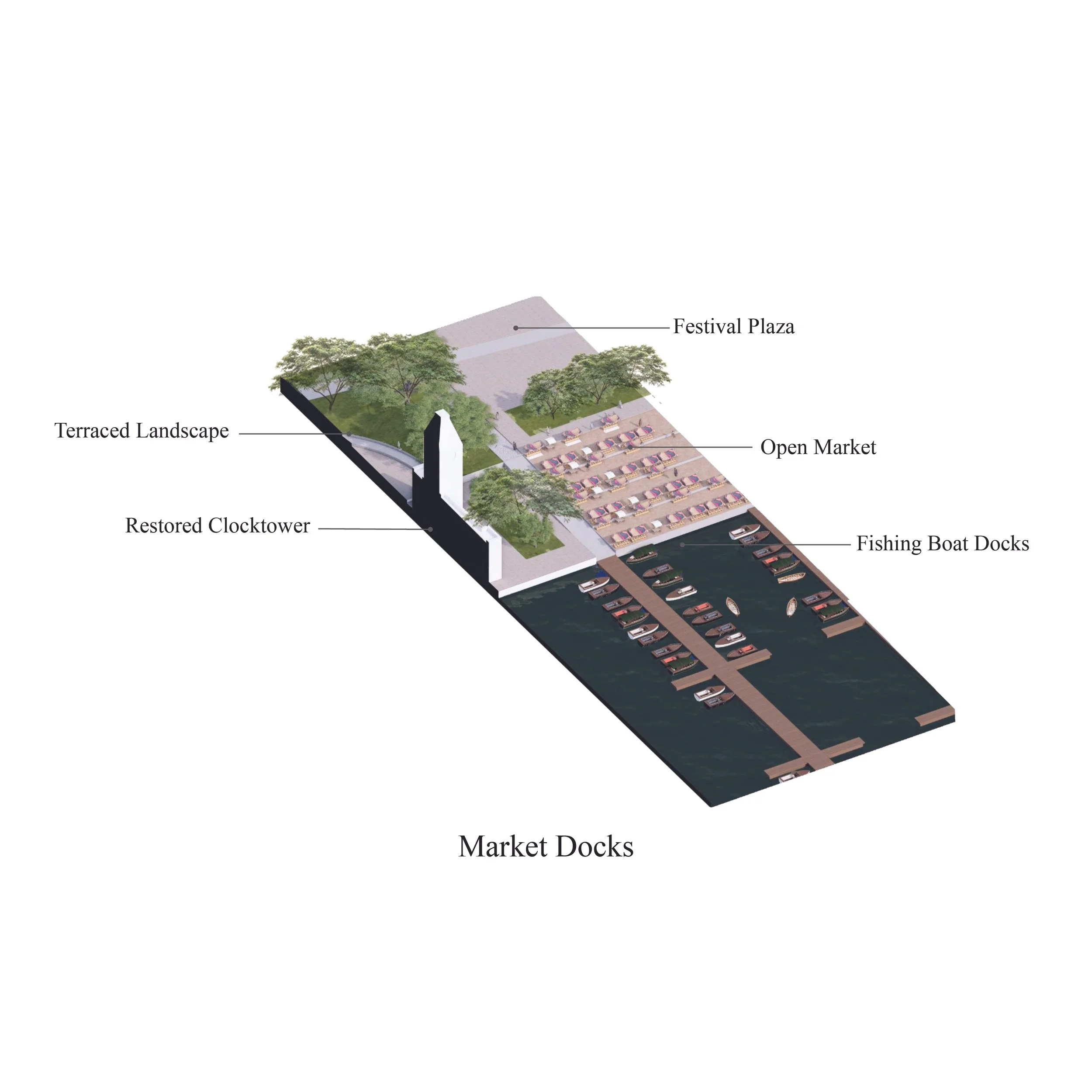
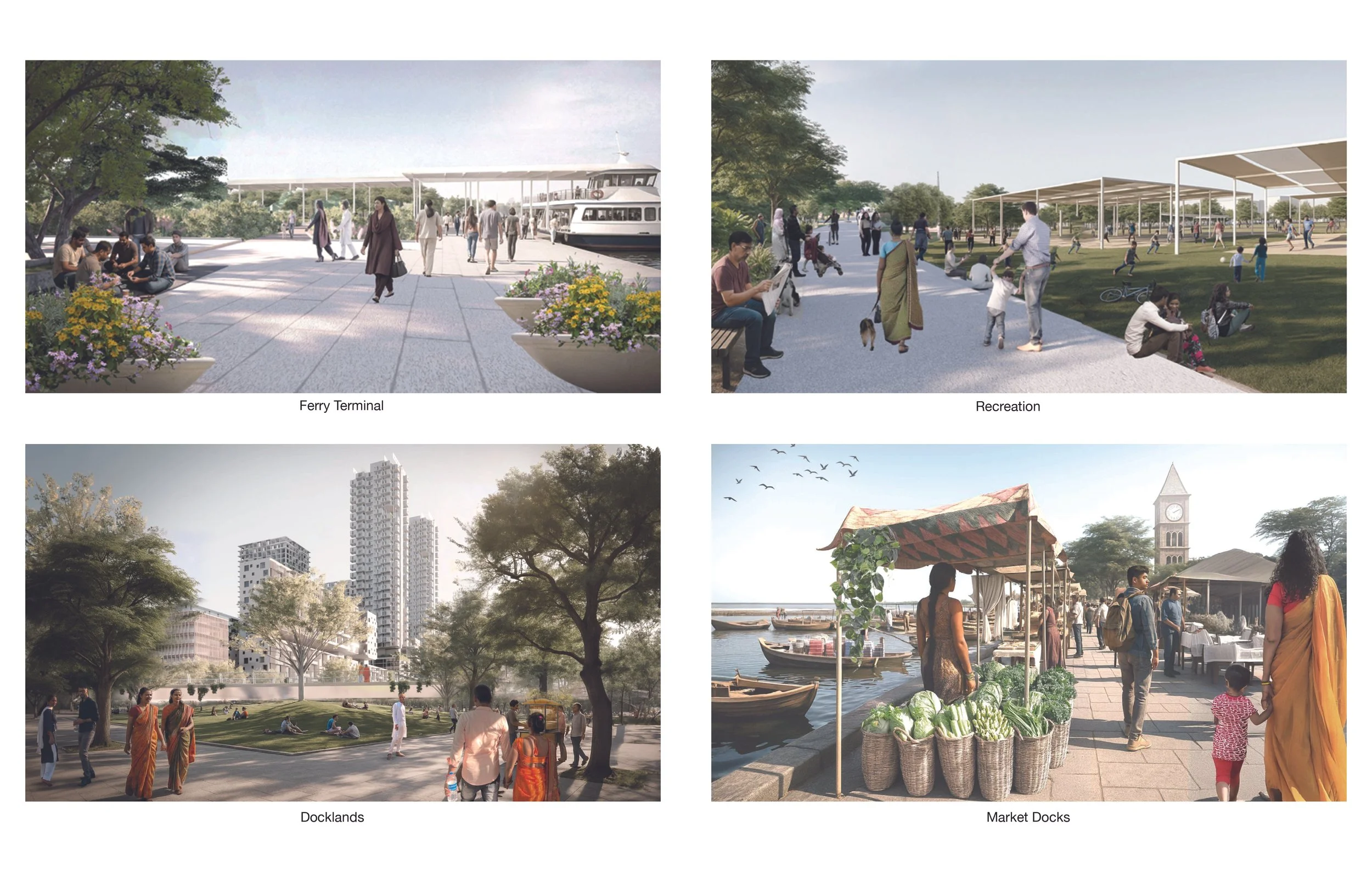
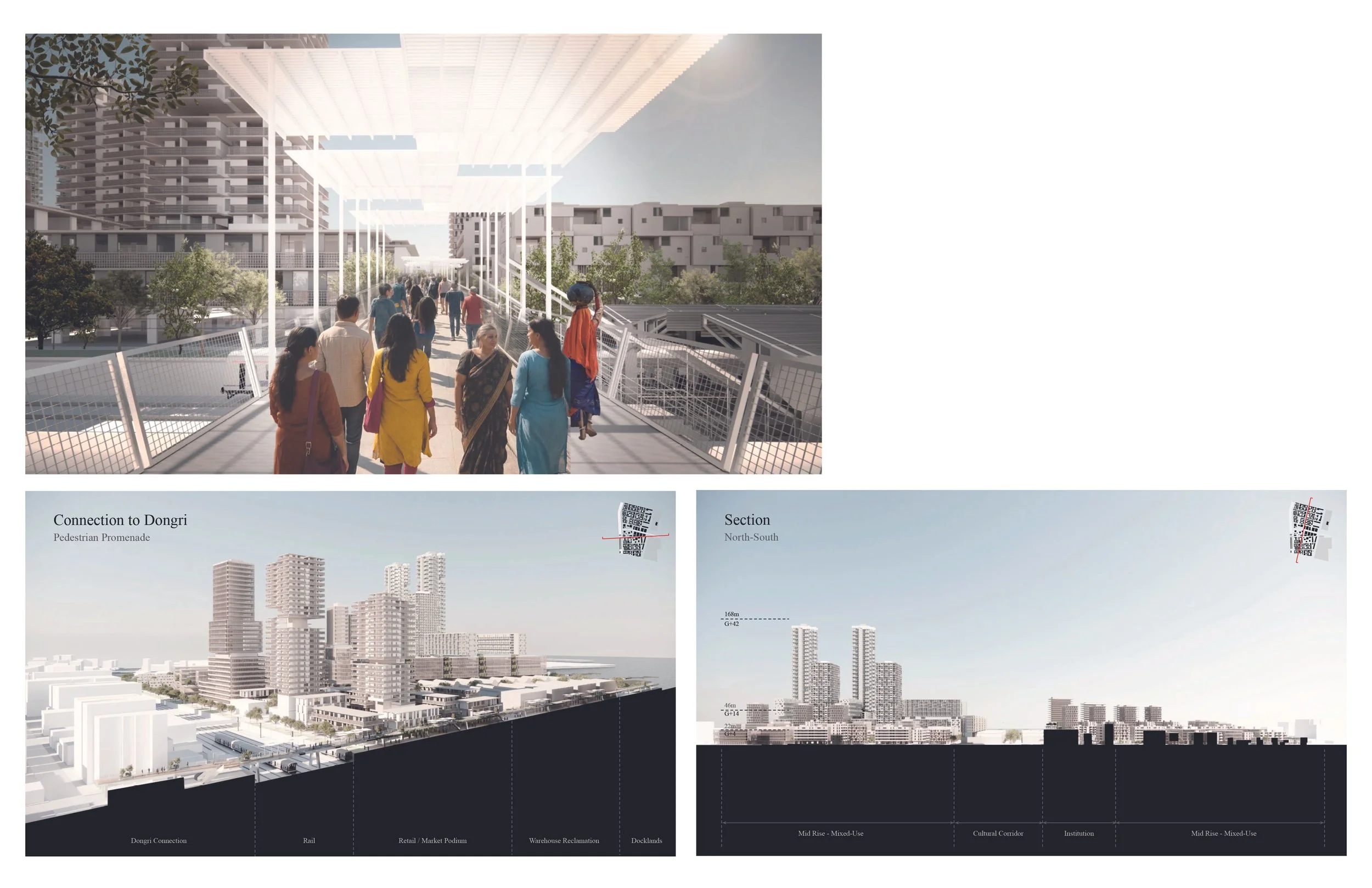
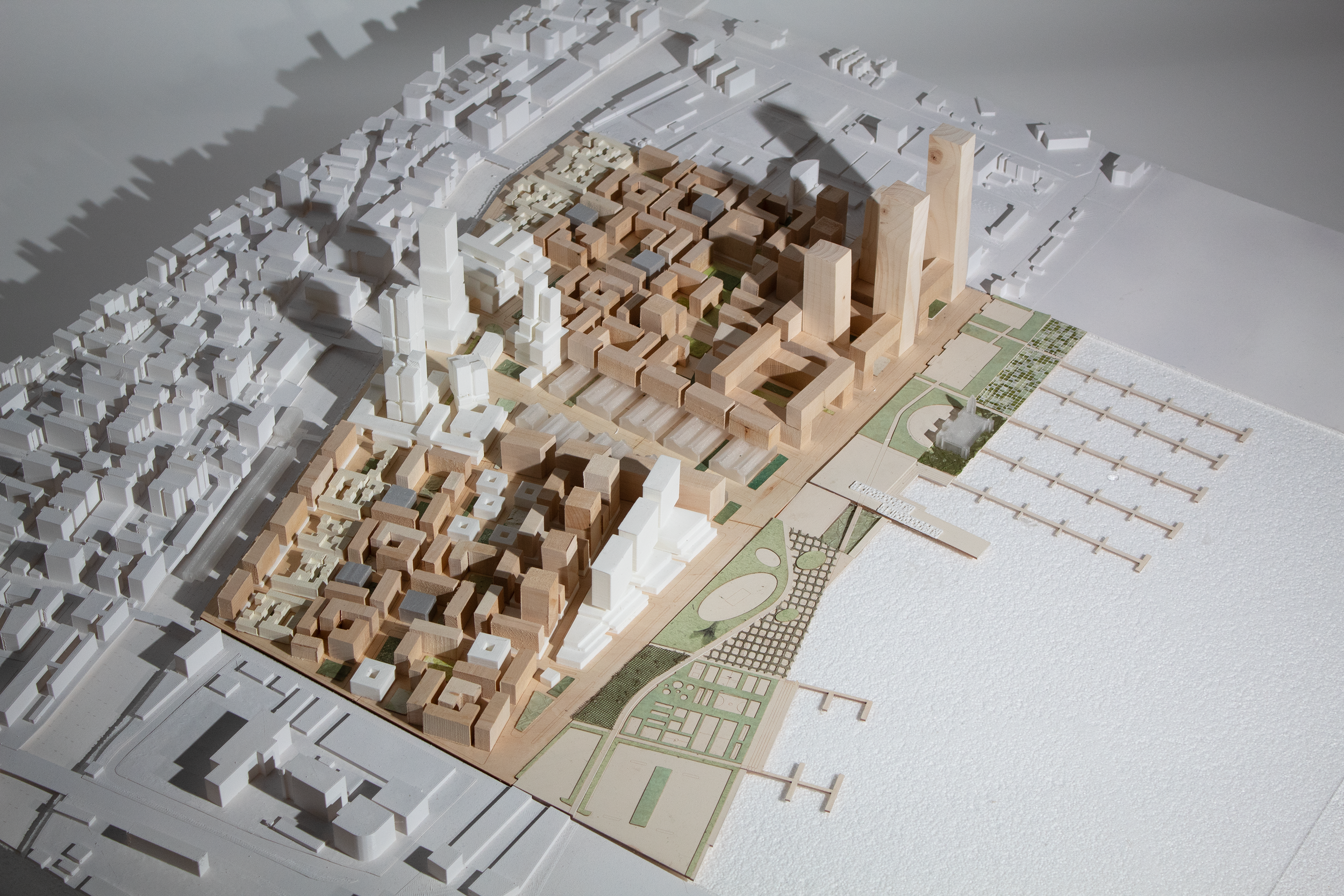
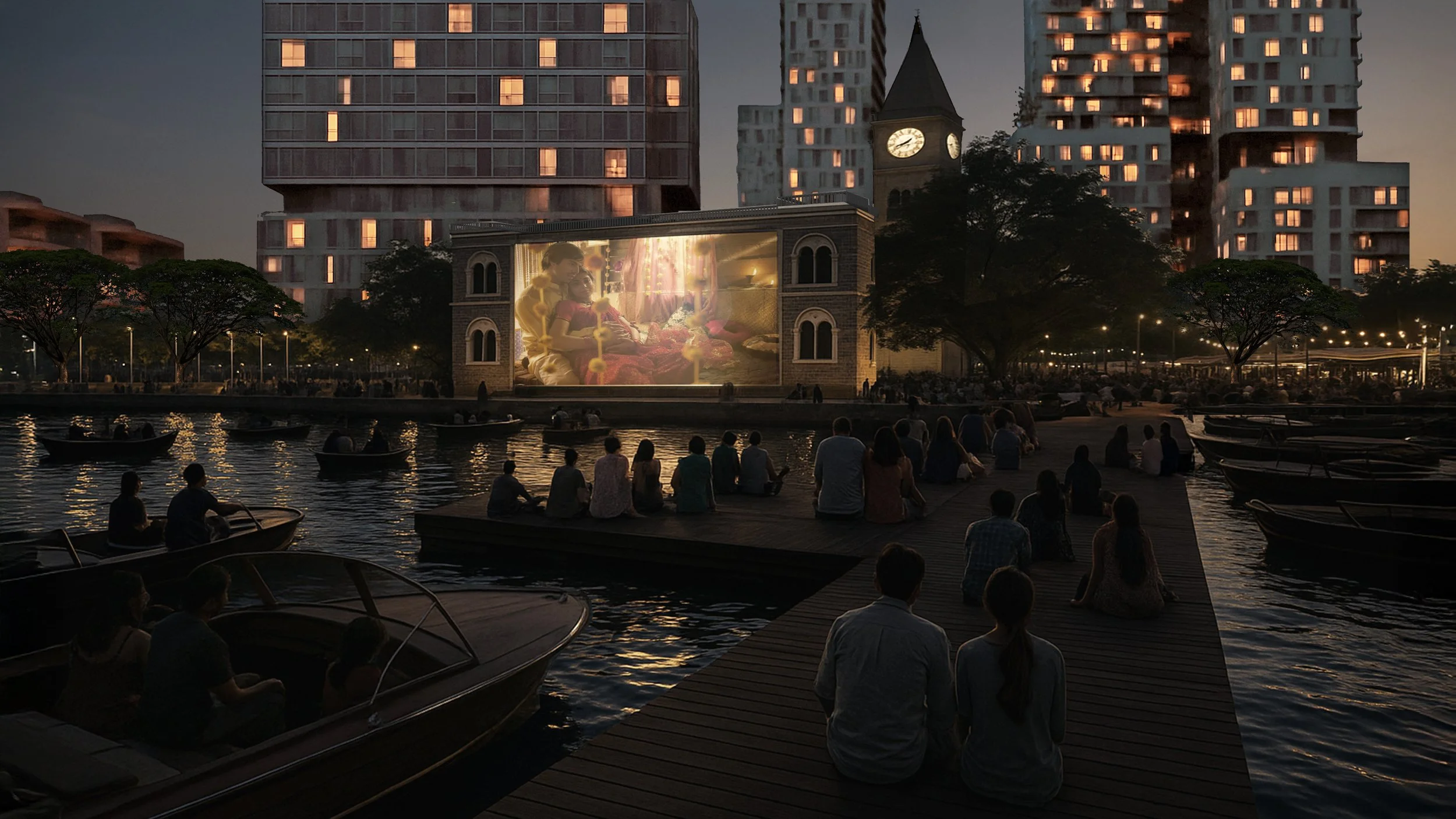
Central to the proposal is the idea of movement generating a connective tissue and a new imaginary of infrastructure. To achieve this, we propose a new cultural corridor that links Masjid Station to a new ferry terminal, readapting the former harbor’s warehouses to reference maritime history while enabling site-based economies. By extending and integrating existing pedestrian networks to the coastline, the project establishes a physical and social connection between transient populations with local communities to activate a new regional amenity.
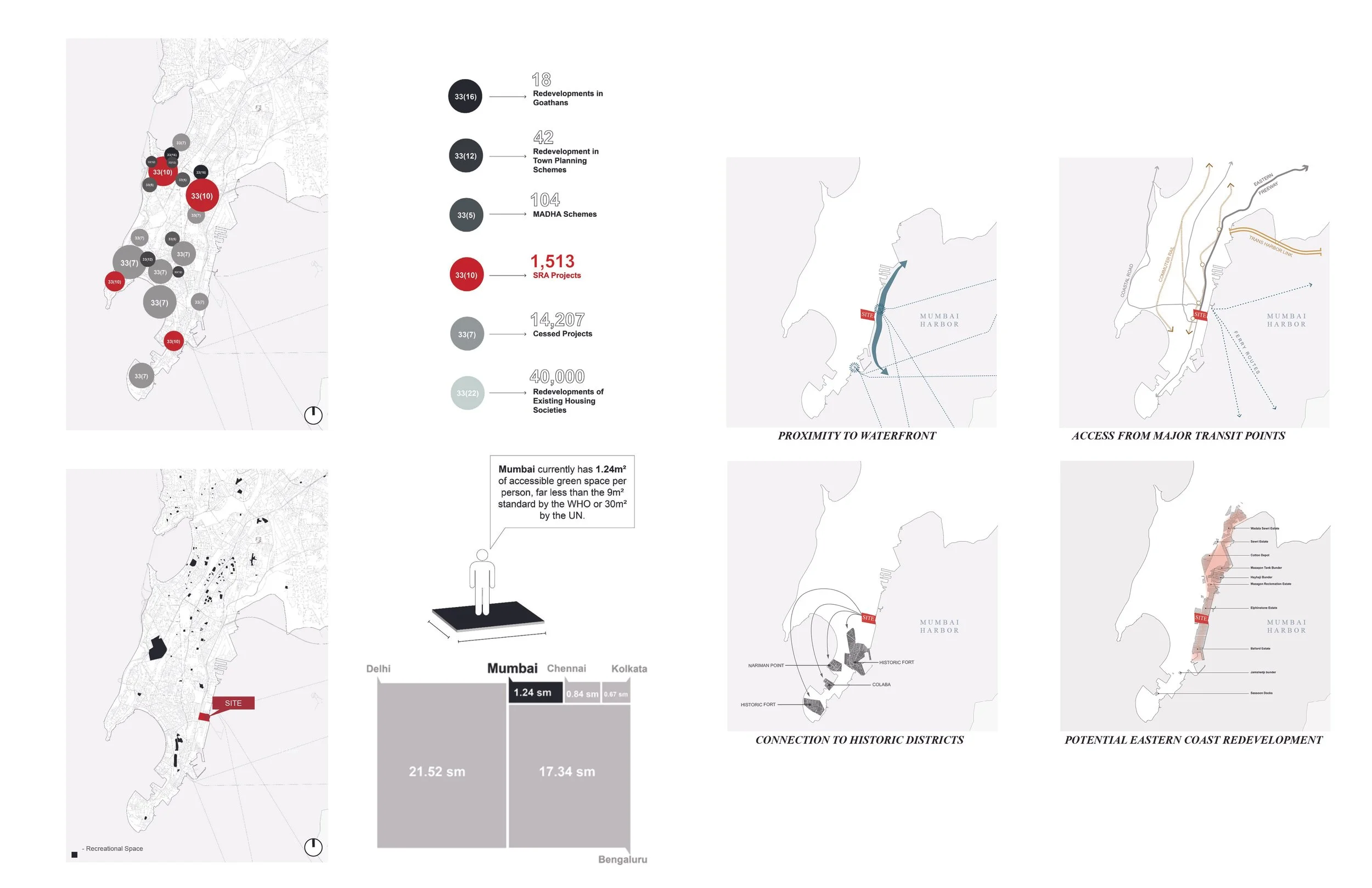
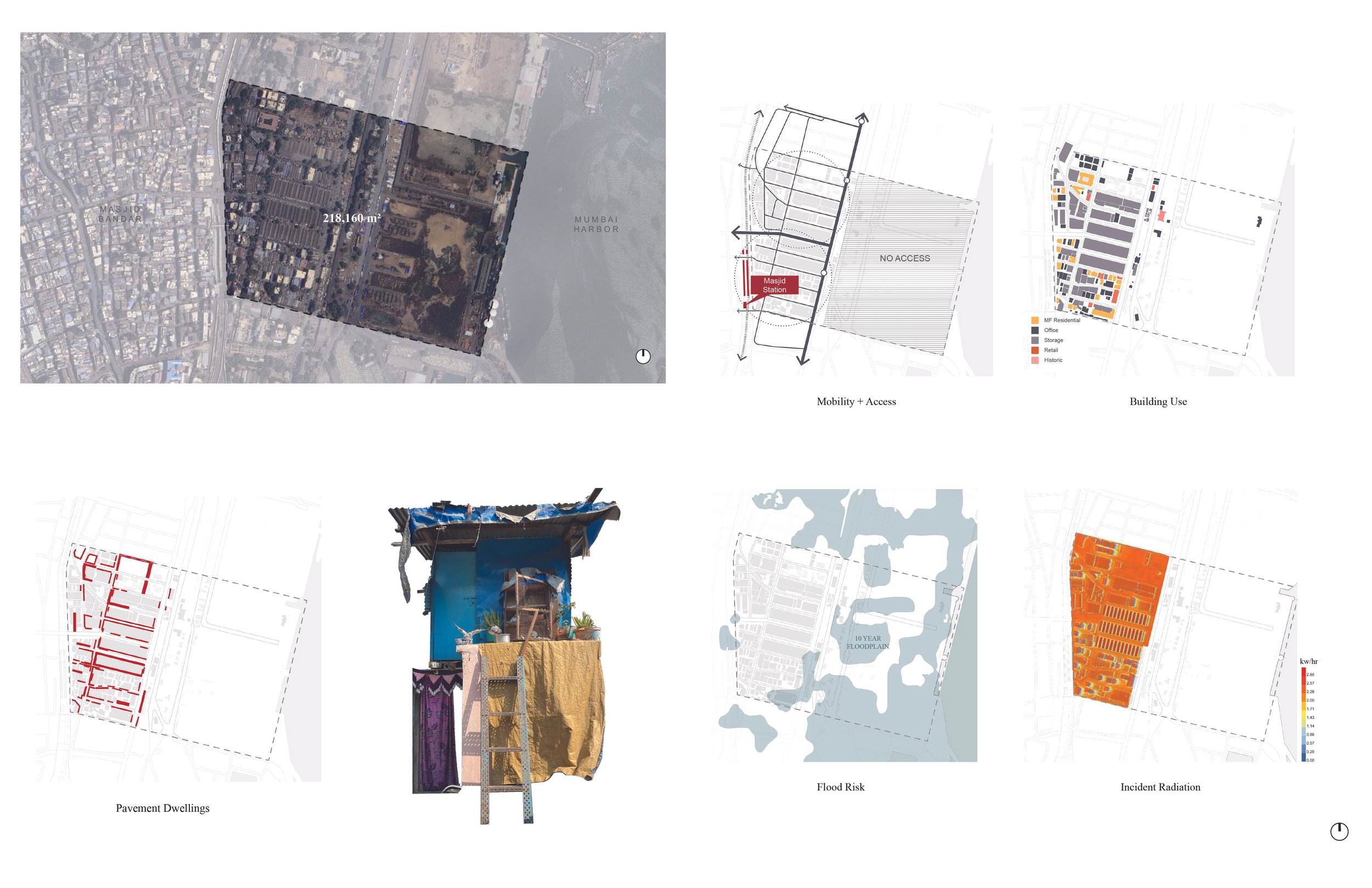
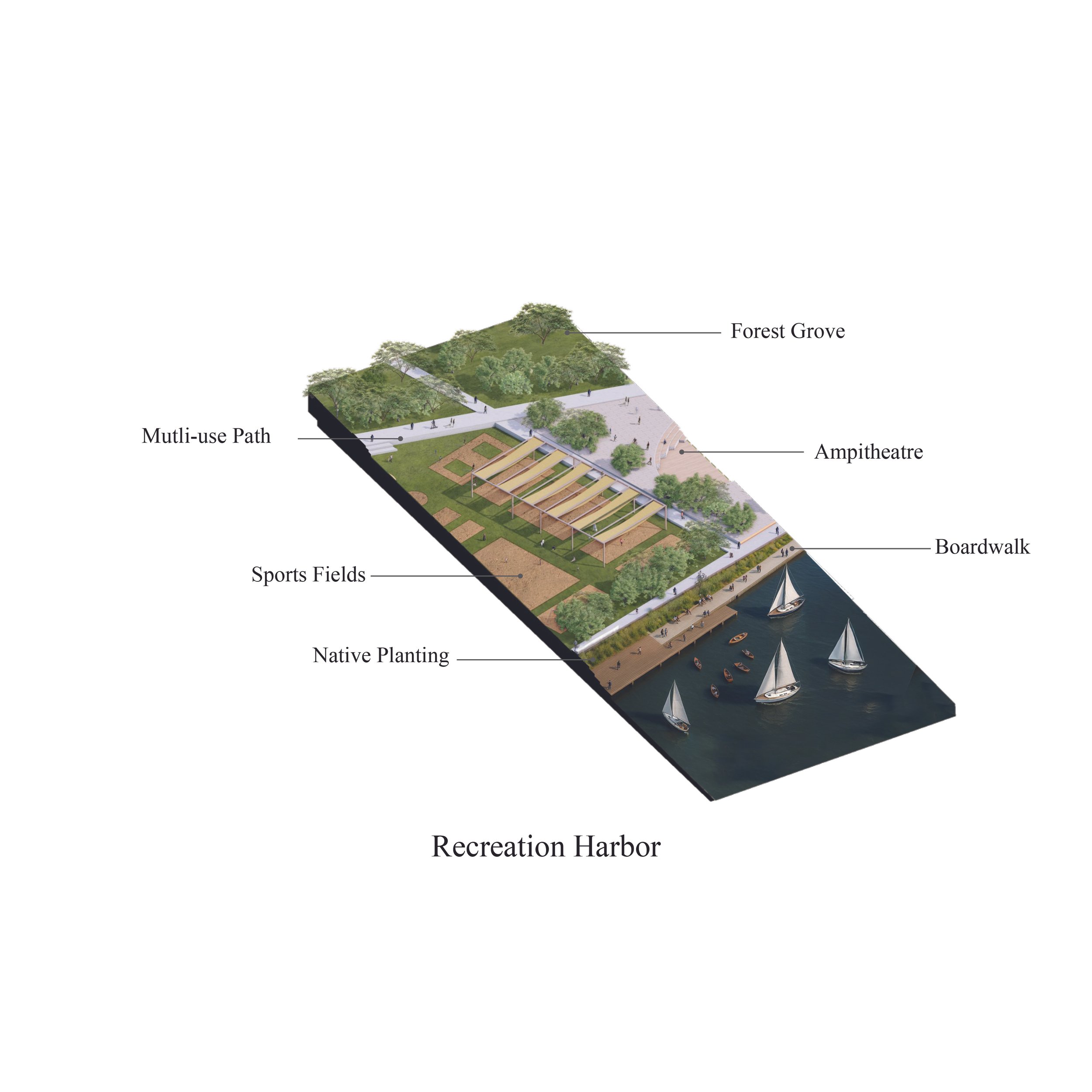
Flood resilience is addressed through the introduction of performative greenspaces along the shoreline, acting as protective buffers against sea-level rise while enhancing equitable access to open space. To combat the increasing heat island effect, the design integrates native trees, canopies for shade, and arcaded pathways, improving thermal comfort and walkability across the district.
The proposal strategically concentrates development rights along the waterfront by employing Transfer of Development Rights (TDR) to reshape the Eastern coastline, diversify housing options, and support sustainable development. This results in a graded urban form through the site making for gentler transitions to the adjacent historic Dongri neighborhood.
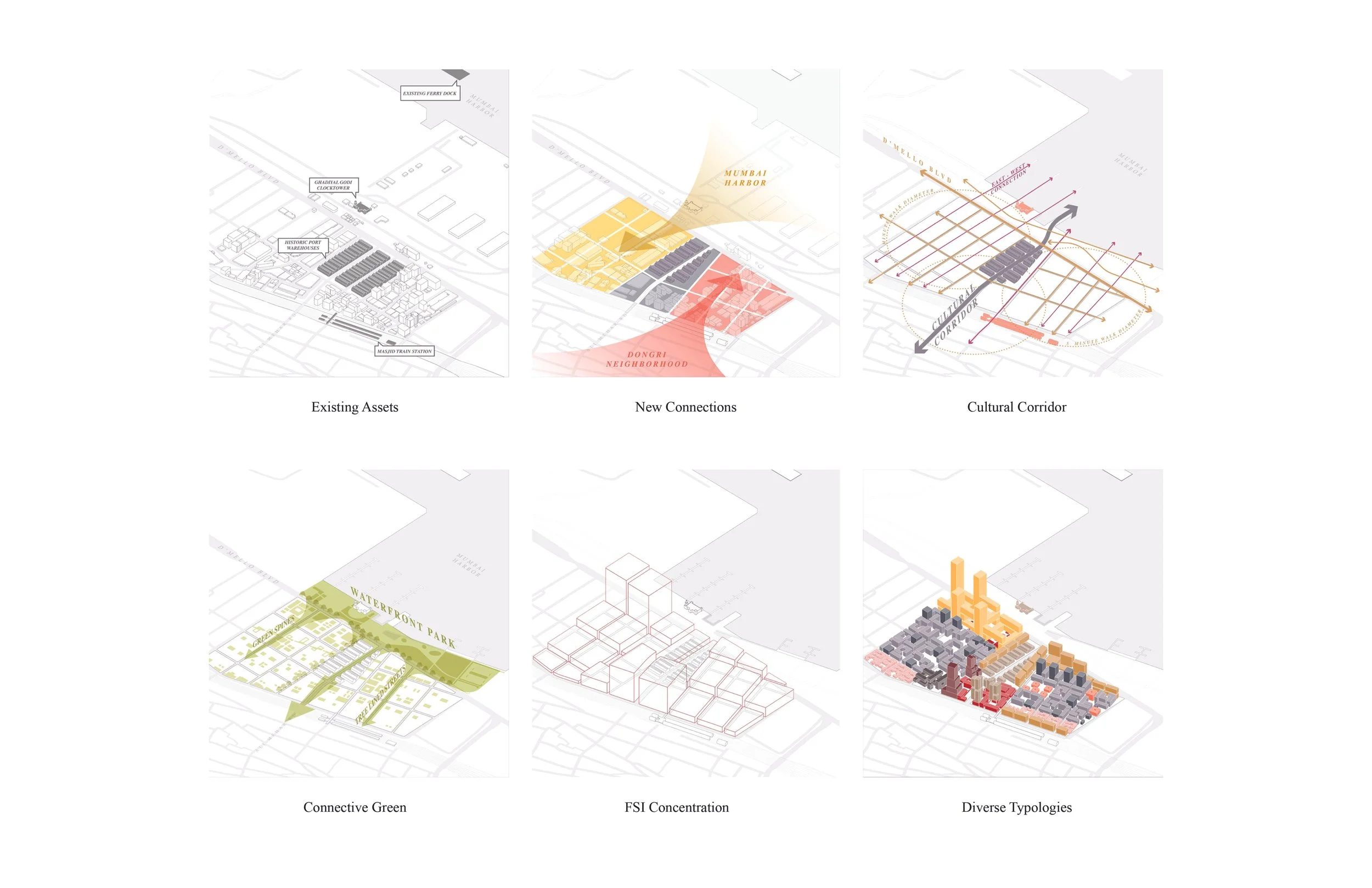
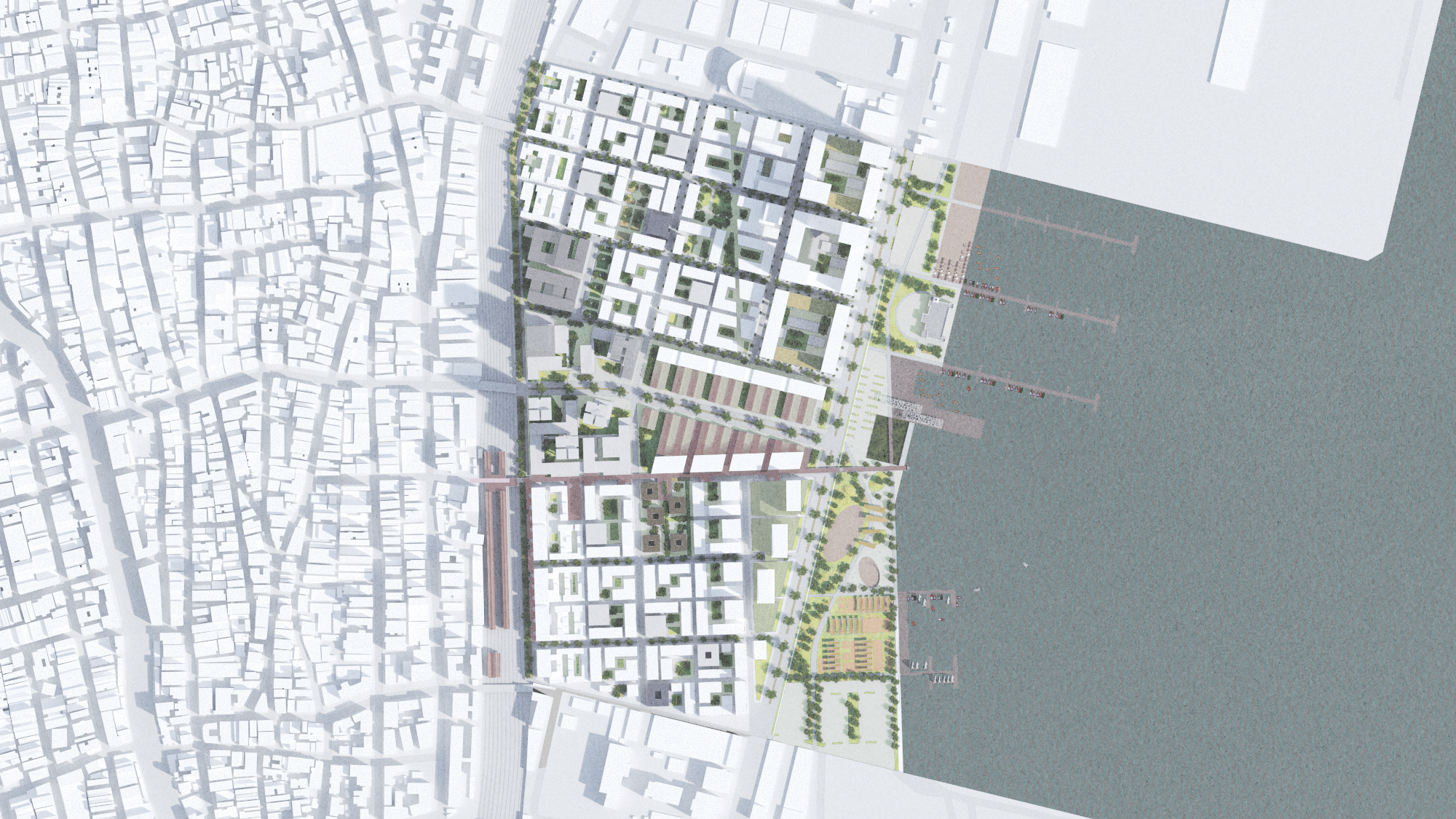
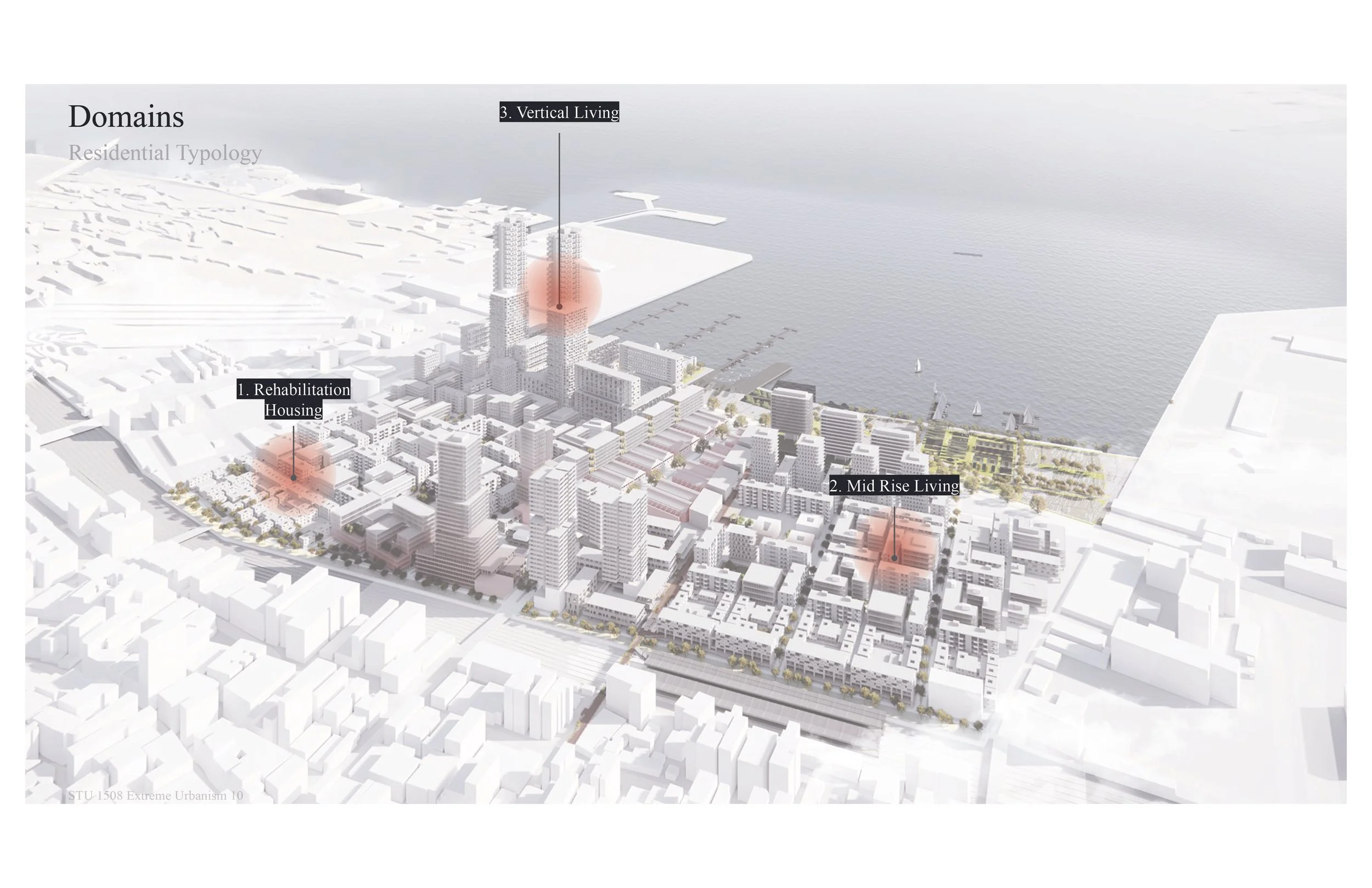
Knitted Domains is envisioned as a model for Mumbai’s kinetic urban fabric-a layered system of movement, memory, and ecology that embraces the city’s interplay of formal and informal systems. The public realm is used as an agent of friction and cohesion, a mediator of seemingly disparate forms. By advancing a negotiated urbanism, the project addresses housing inequality and climate vulnerability through new forms of infrastructure designed to suture, rather than rupture, the reclaimed urban fabric.