Urbano Fluvial: Inverting Sewersheds in Valencia, Spain
Year: 2025
Site: Valencia, Spain
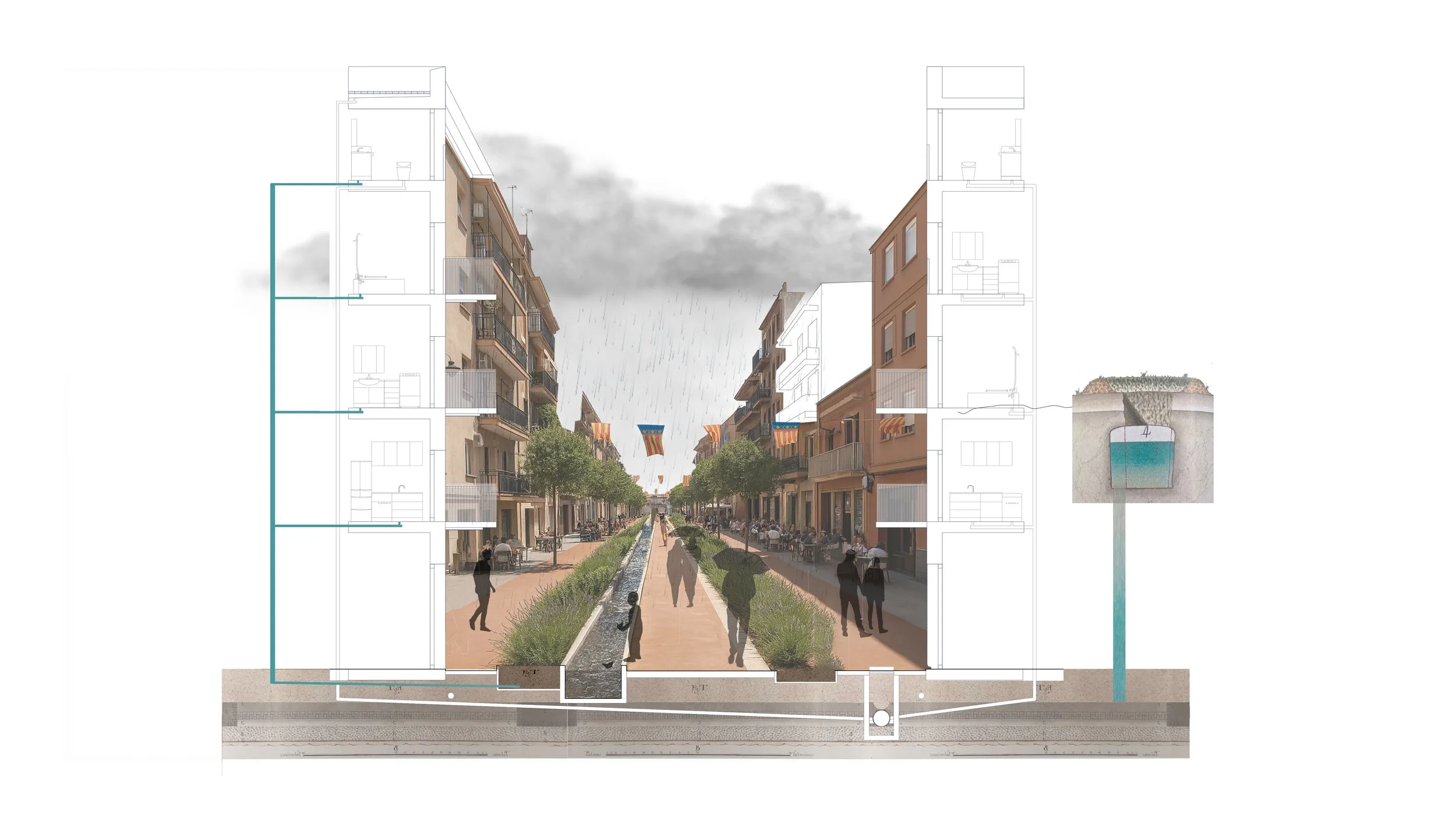
Urbano Fluvial proposes a reversal of more than 150 years of urban metabolic change through which Valencia’s historic acequia irrigation system, once a visible and collectively governed infrastructure of distribution, was evolved into combined sewers that now concentrate wastewater and flood risk. The 2024 DANA floods revealed the consequences of this transformation at both urban and watershed scales. Former acequias became concealed collectors, untreated overflow spread across the Huerta and the city, and the functional separation between productive landscape and urban sanitation collapsed under torrential rainfall.
Advancing an inverse operation, the project activates separated stormwater and treated flows as a renewed network of urban acequias. These channels reappear as a socially responsive hydrological system that connects wastewater treatment plants, neighborhoods, cultural landscapes, and the first phase of the Parc Fluvial del Turia. Through this reconfiguration, the proposal expands the territorial scale of collective water management and repositions infrastructure as a shared civic system, through visibility, stewardship, and local governance regional scales.
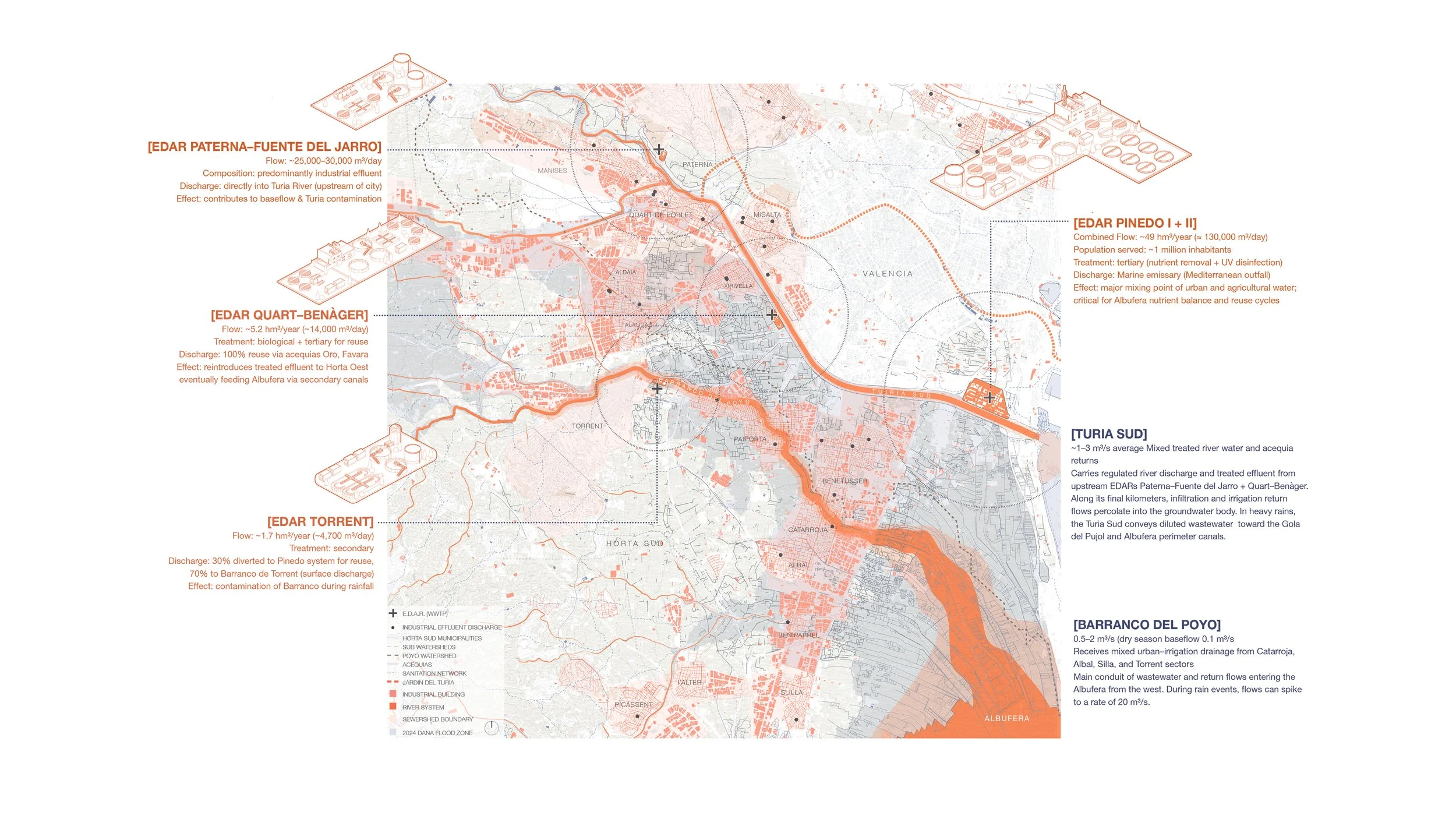
Tracing the hydroterritory of Valencia’s sewersheds, where contaminated water discharges from urban nodes into rivers, acequias, and ultimately the Albufera and sea.
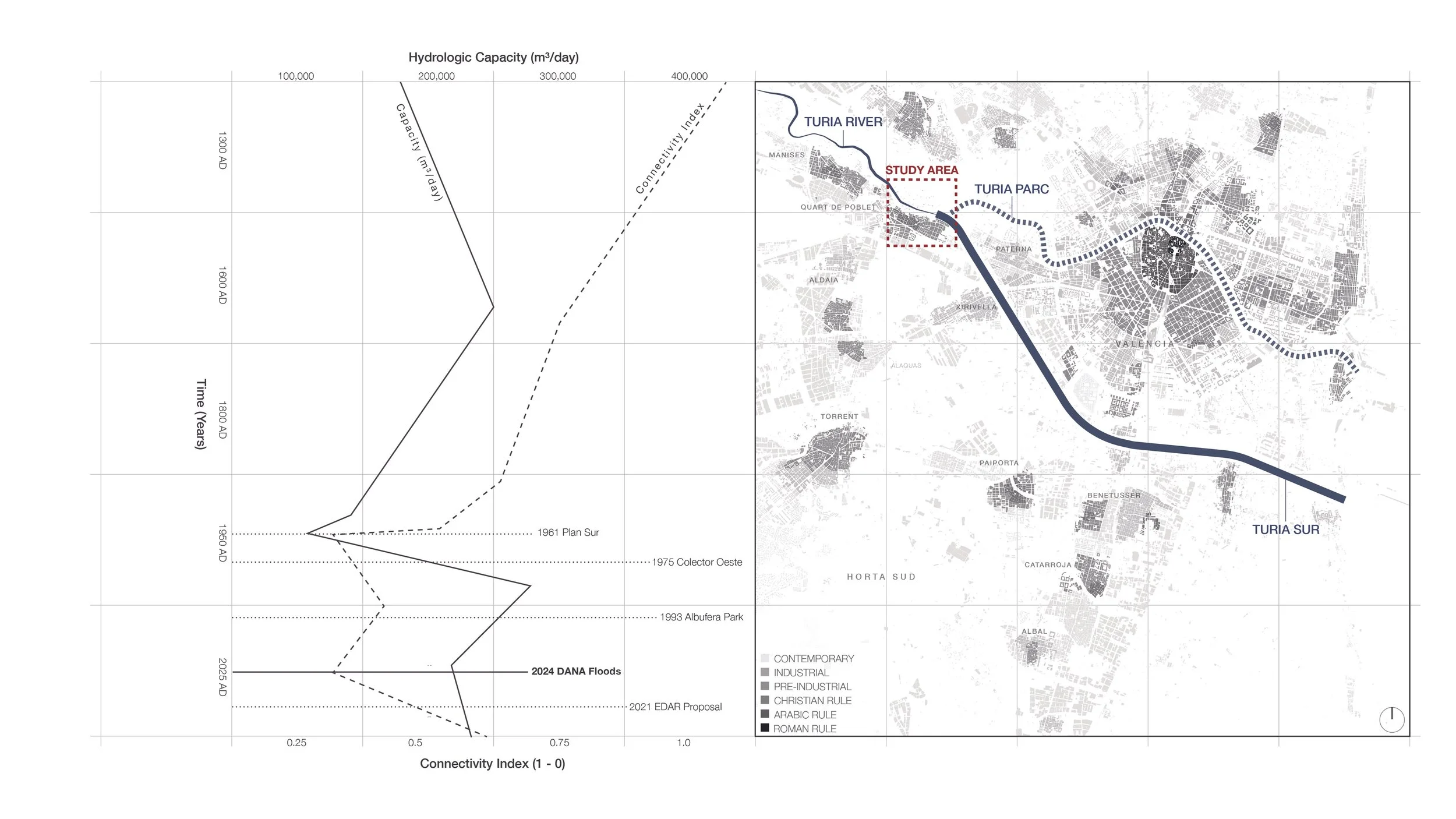
Centralized hydraulic capacity directly correlates with industrial-era territorial fragmentations. As Valencia constructed monofunctional infrastructure, it simultaneously dismantled the distributed acequia network that previously unified city and huerta.
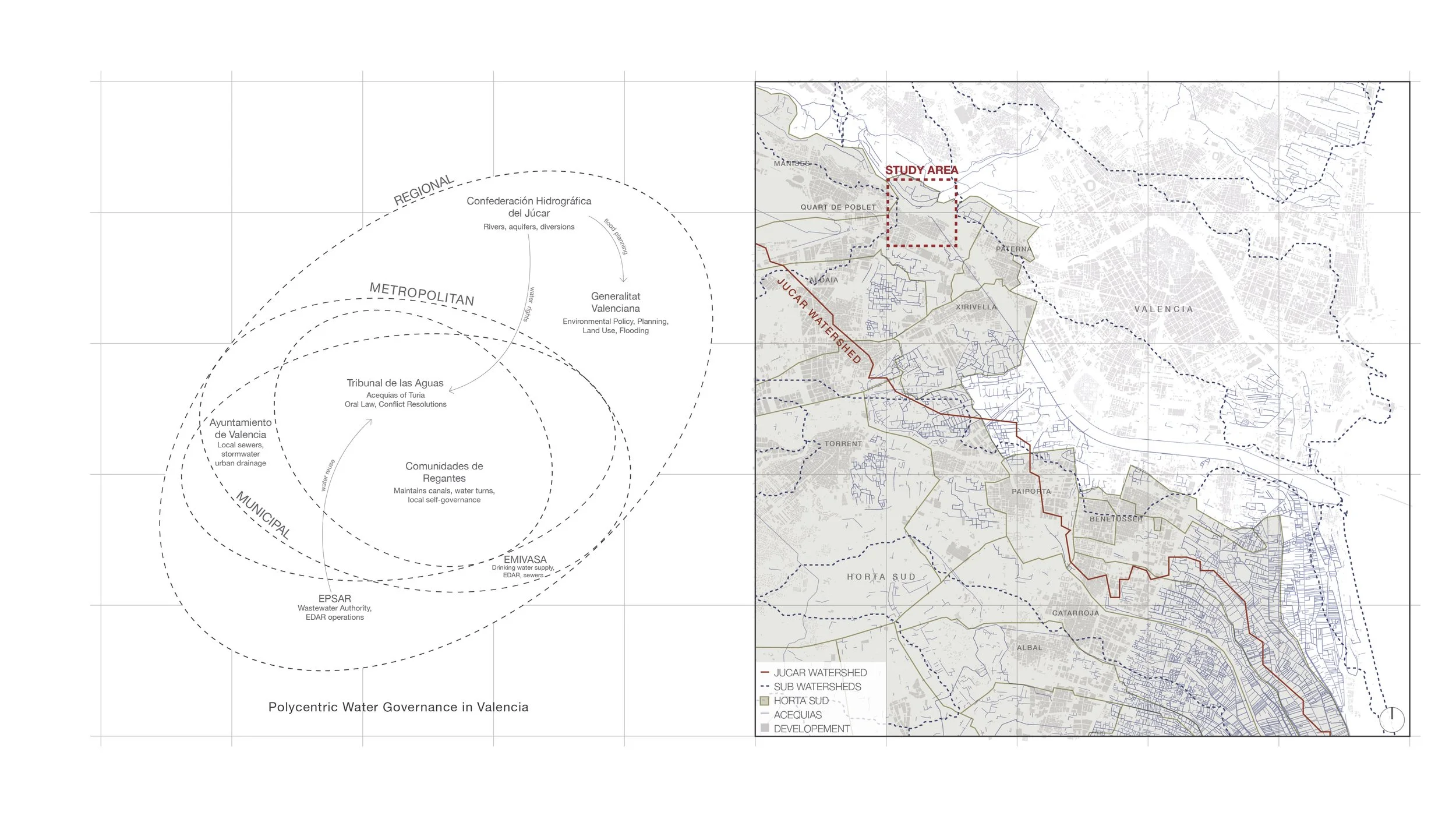
Valencia’s water governance has shifted from the Water Tribunal to fragmented, overlapping jurisdictions, breaking alignment between hydrology, infrastructure, and governance.
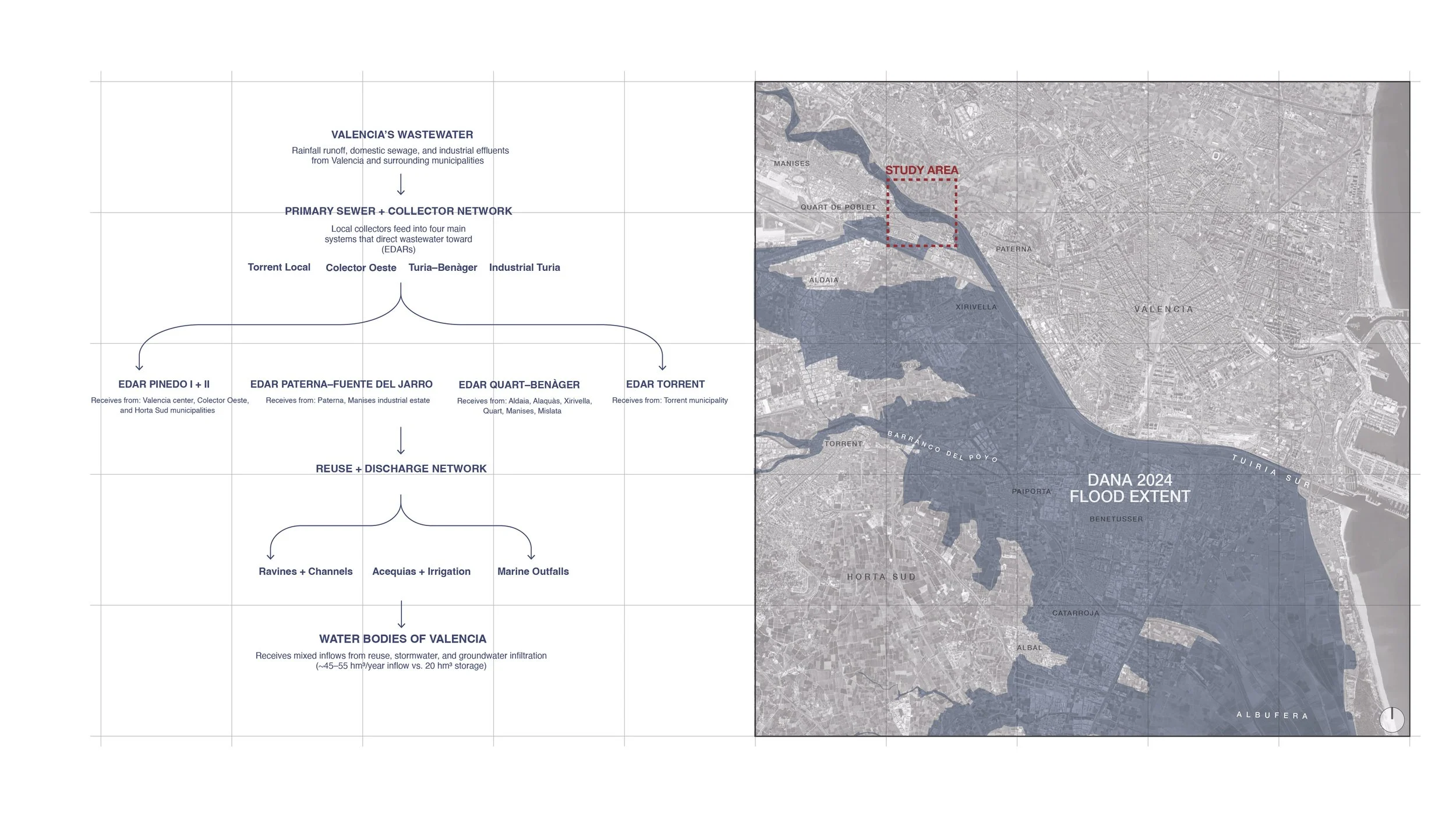
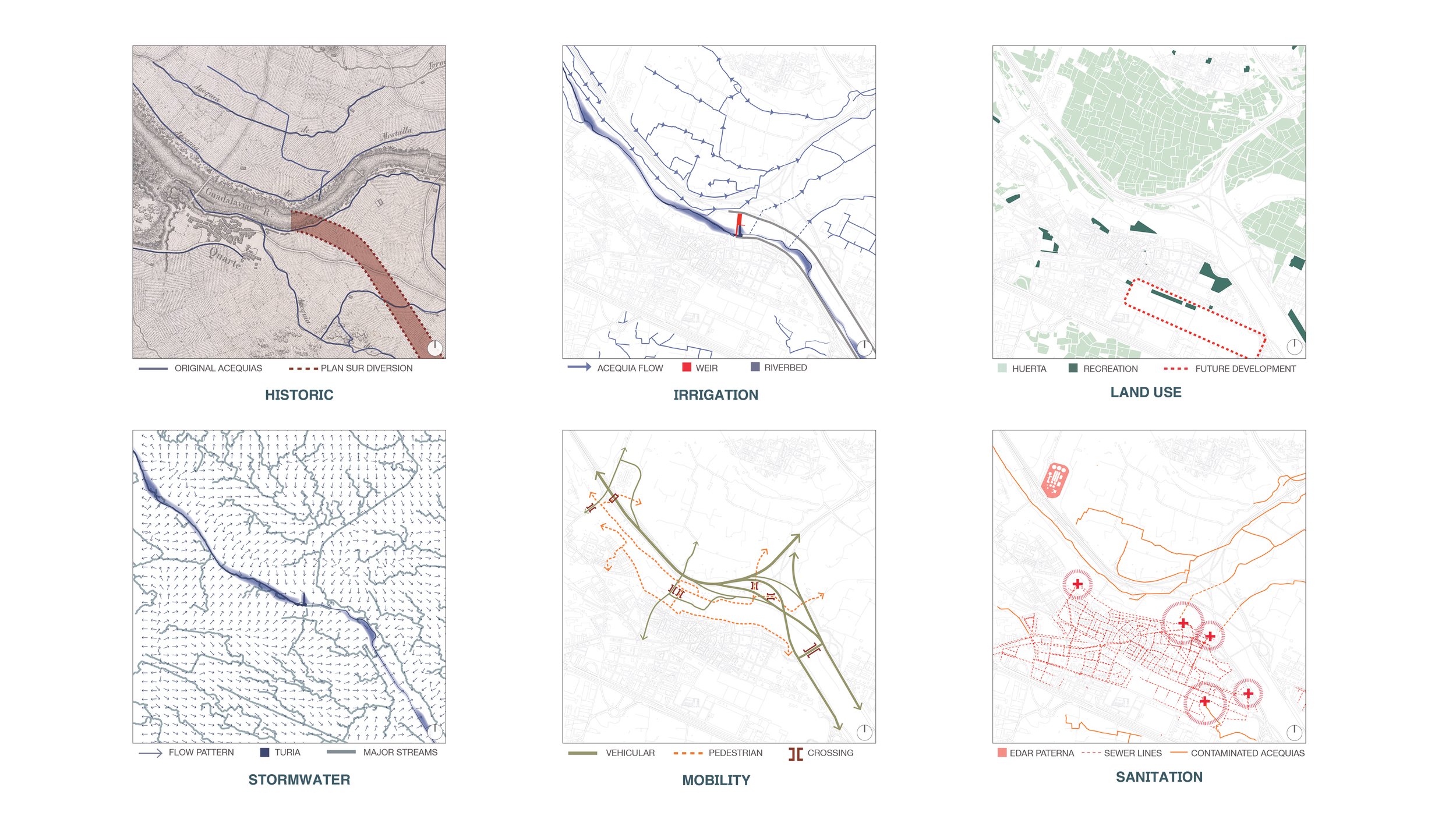
Existing Conditions. The study area lies between the Huerta and the neighborhood of Quart-Benager at the hinge where the Turia diverts into a concrete flood channel, with pedestrian access largely absent between the two.
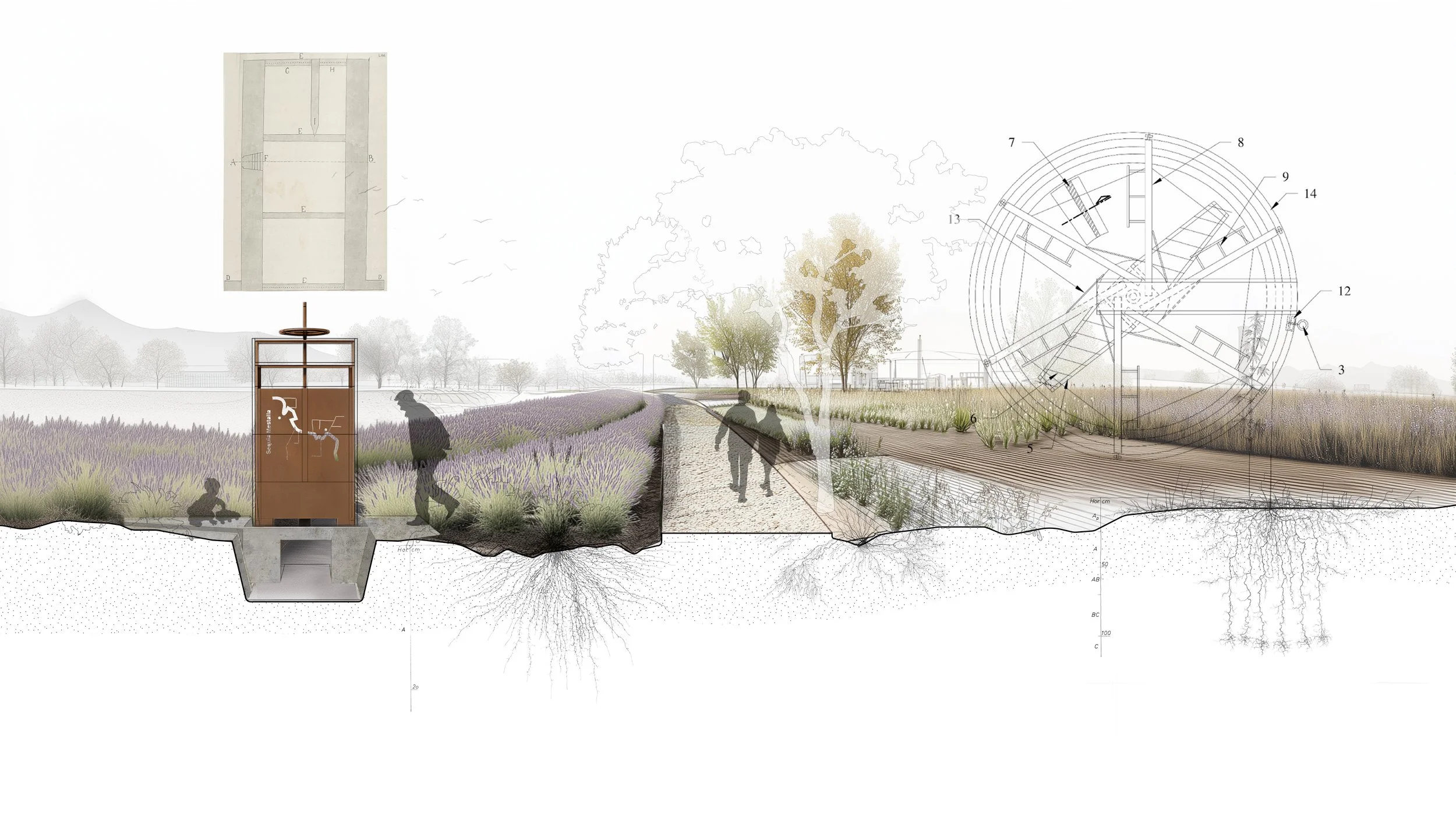
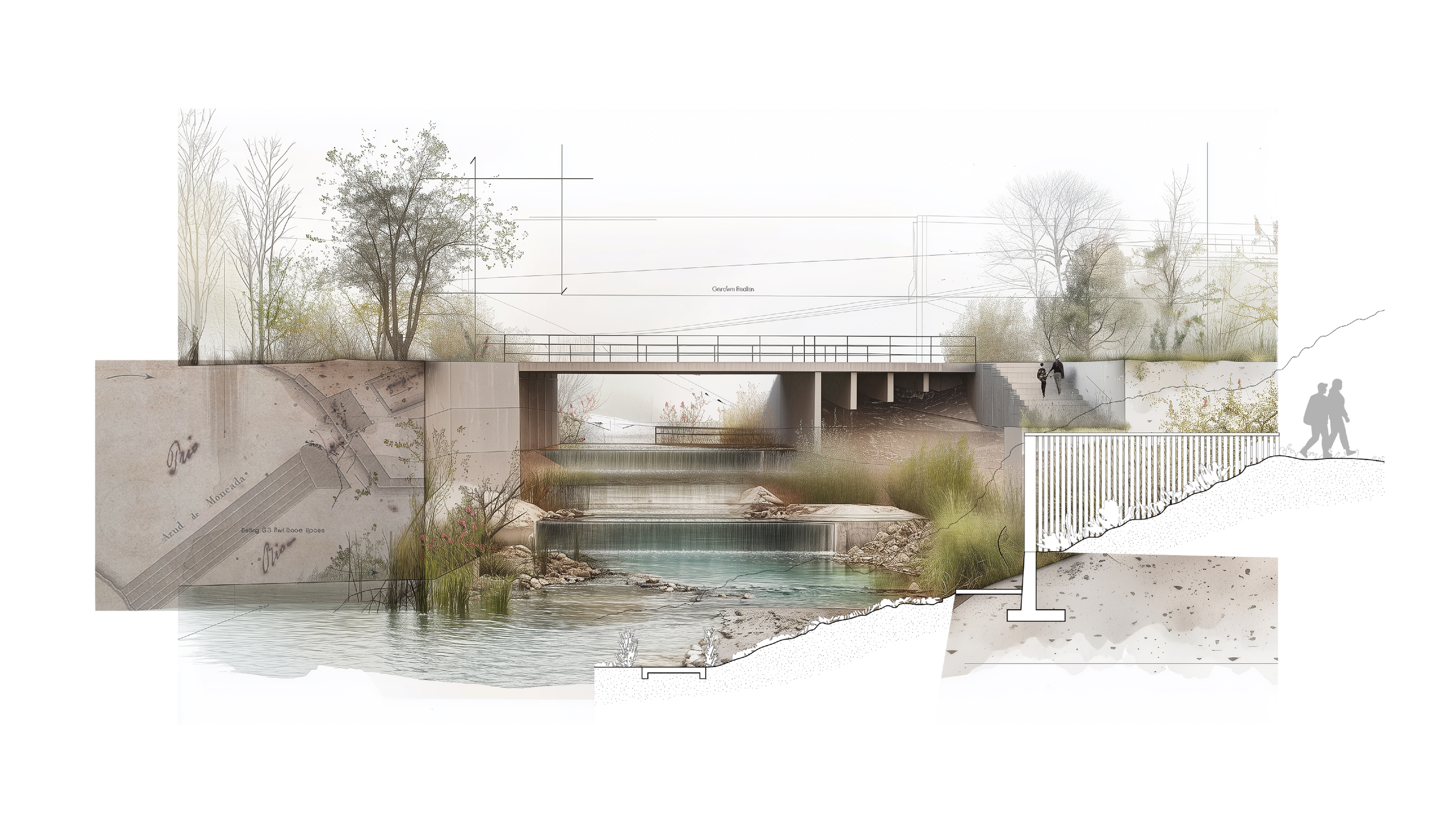
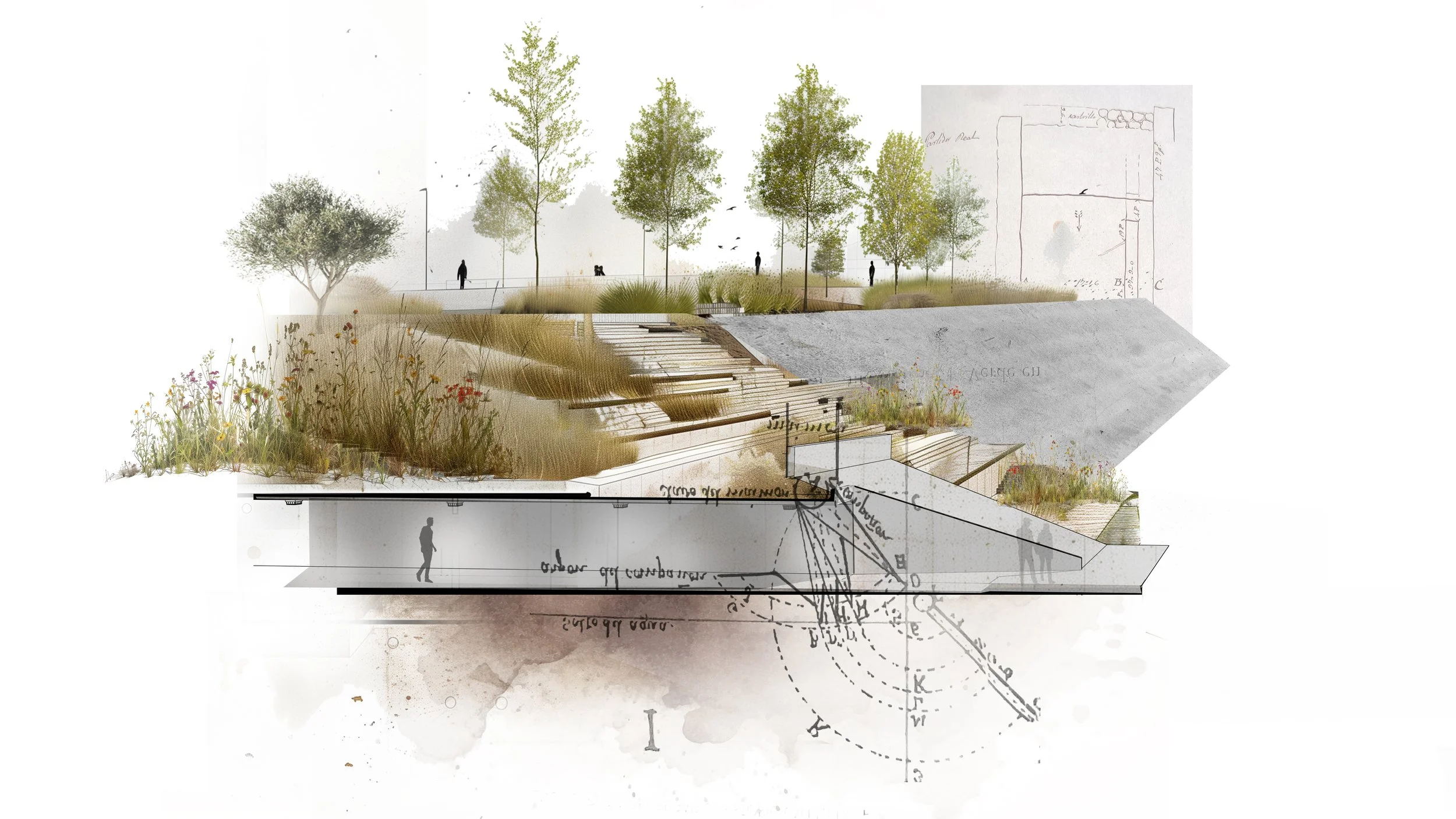
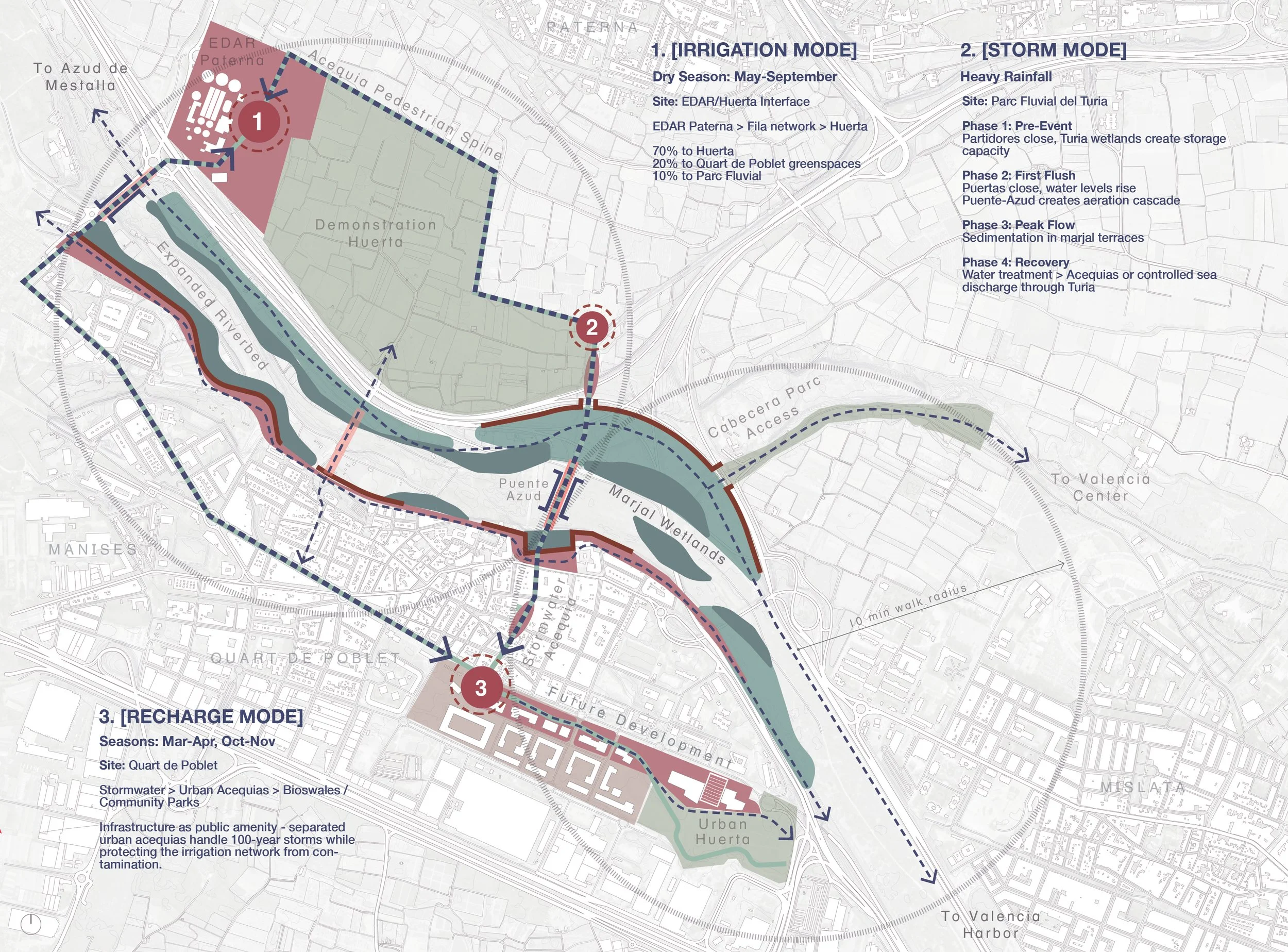
The proposal positions historic infrastructure as a cultural artifact and projects it forward through spatial, institutional, and hydrolo-logics. Sited at the hinge of the diverted Turia, where the flood channel, water treatment facilities, and infrastructure corridors converge, the project choreographs a seasonal water metabolism organized across three operational modes. Irrigation periods route treated water through open channels to the Huerta, supporting agricultural continuity under increasing climatic stress. Storm events trigger the interception and polishing of urban runoff through constructed wetlands and floodable parks. Recharge seasons redirect pluvial flows toward groundwater recharge, restoring depleted subsurface reserves.
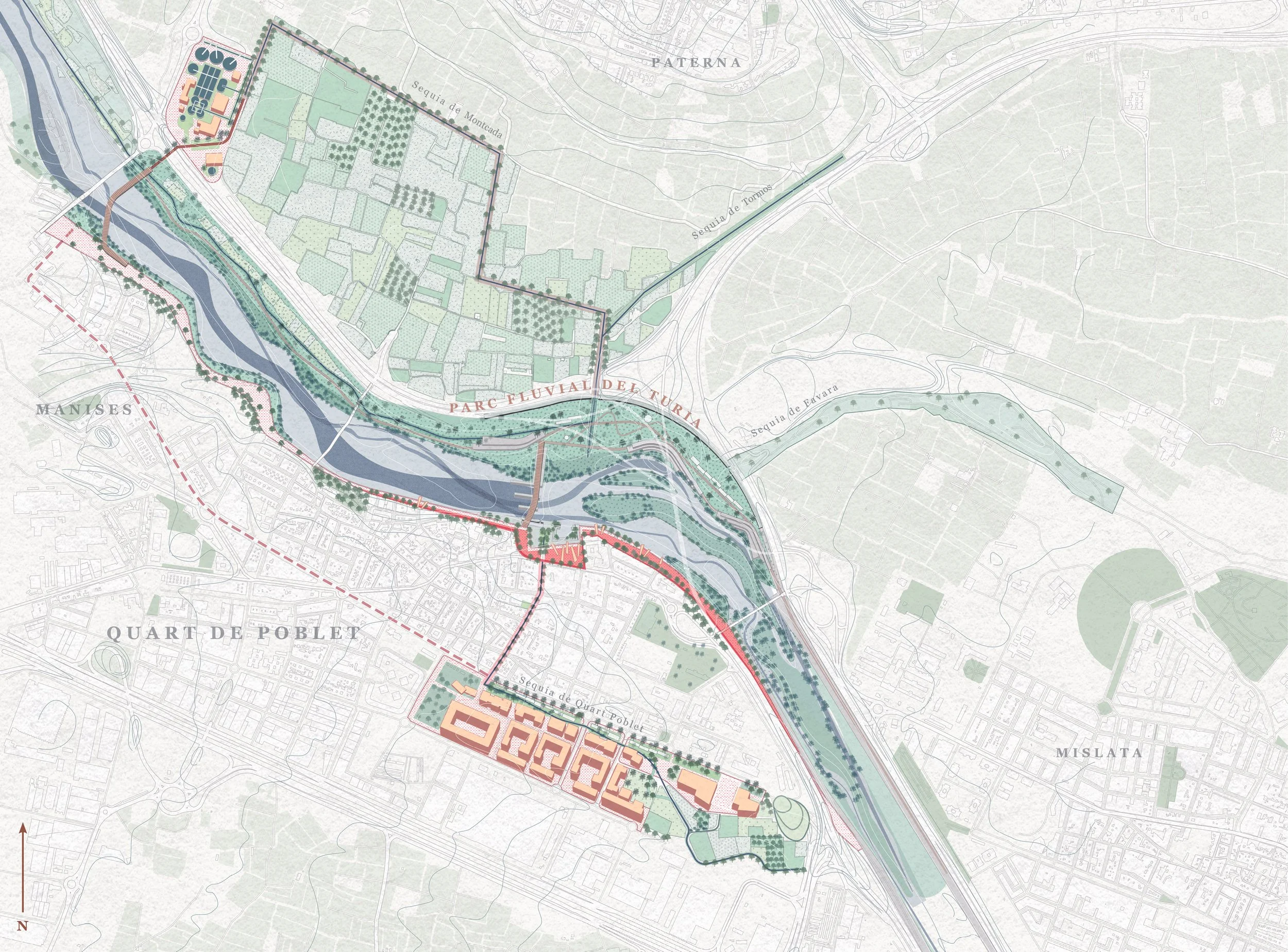
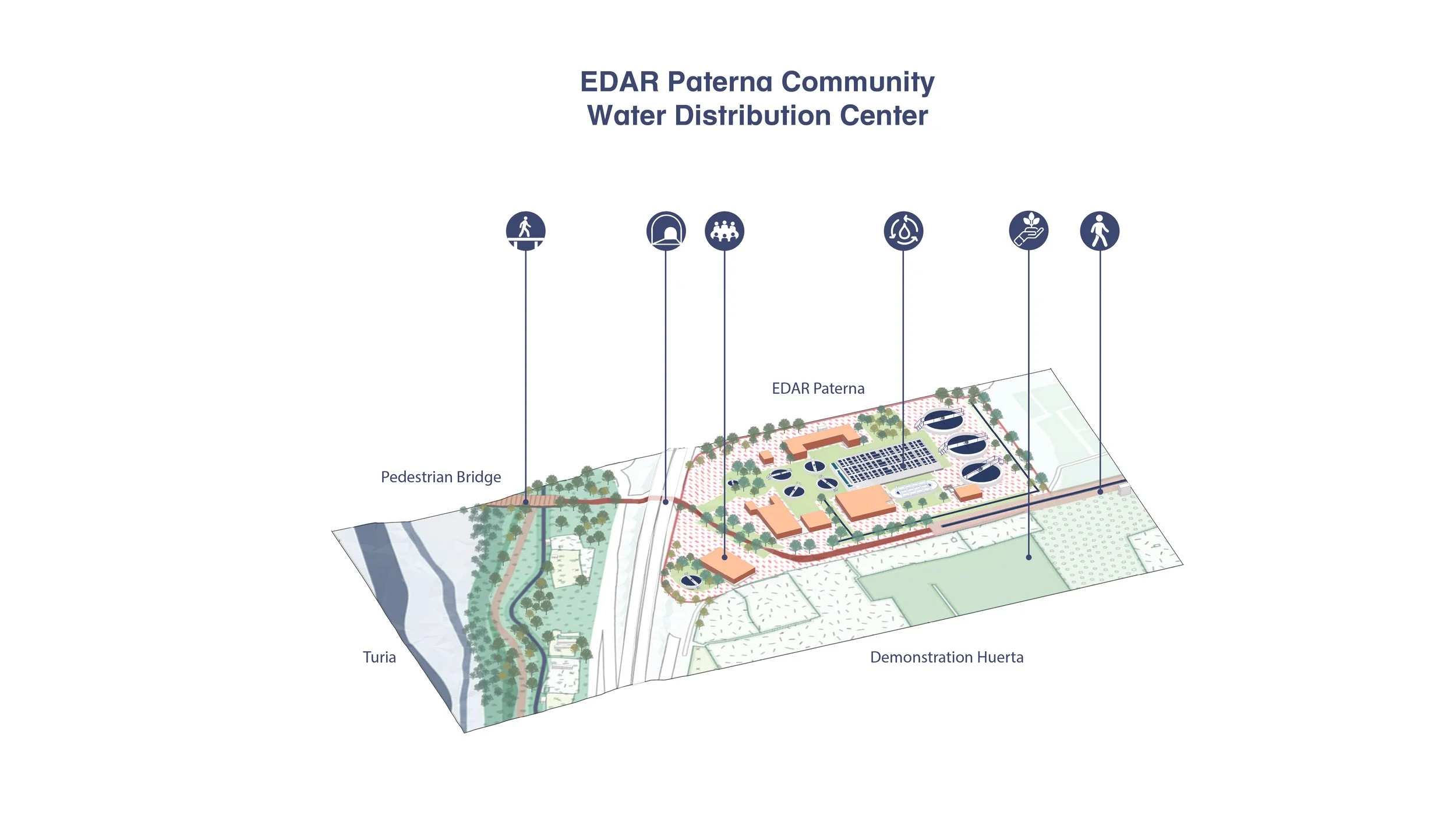
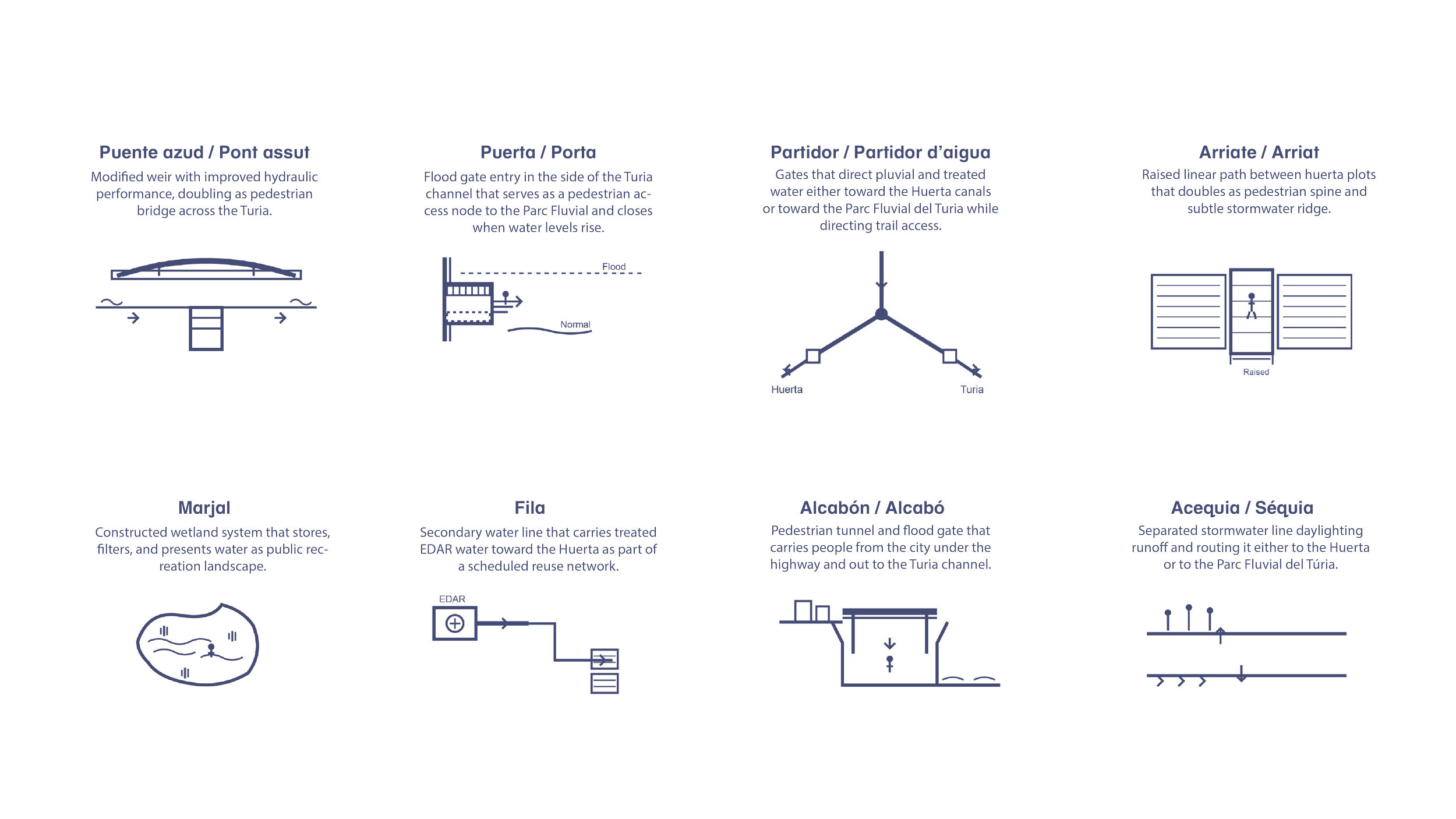
Historic irrigation typologies, such as the azud, partidor, marjal, and alcabón, are translated into contemporary hybrid elements that act simultaneously as hydraulic and spatial devices. These elements also serve as institutional thresholds. Puente-azuds and partidores become spaces where new rules of allocation, access, and maintenance are negotiated. The project asks how institutions such as the Water Tribunal might evolve to govern pluvial and treated urban water, extending customary logics of collective decision making beyond irrigation. In doing so, Urbano Fluvial imagines new forms of water governance that reconfigures infrastructure, territory, and civic life through urban flows.