Quien La Trabaja: Recalibrating Avocado Production through Ejidal Systems
Year: 2025
Site: Michoacán, Mexico
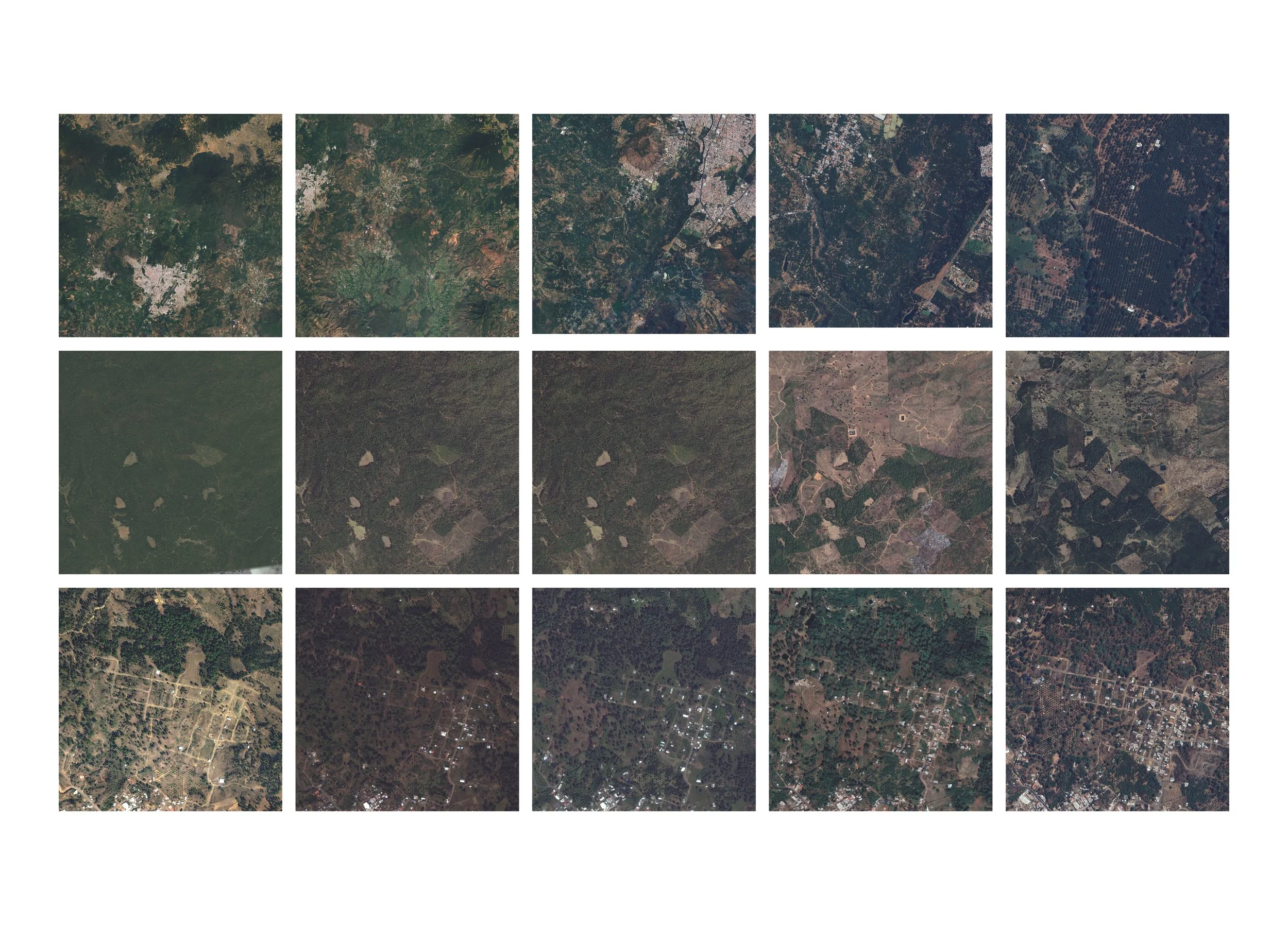
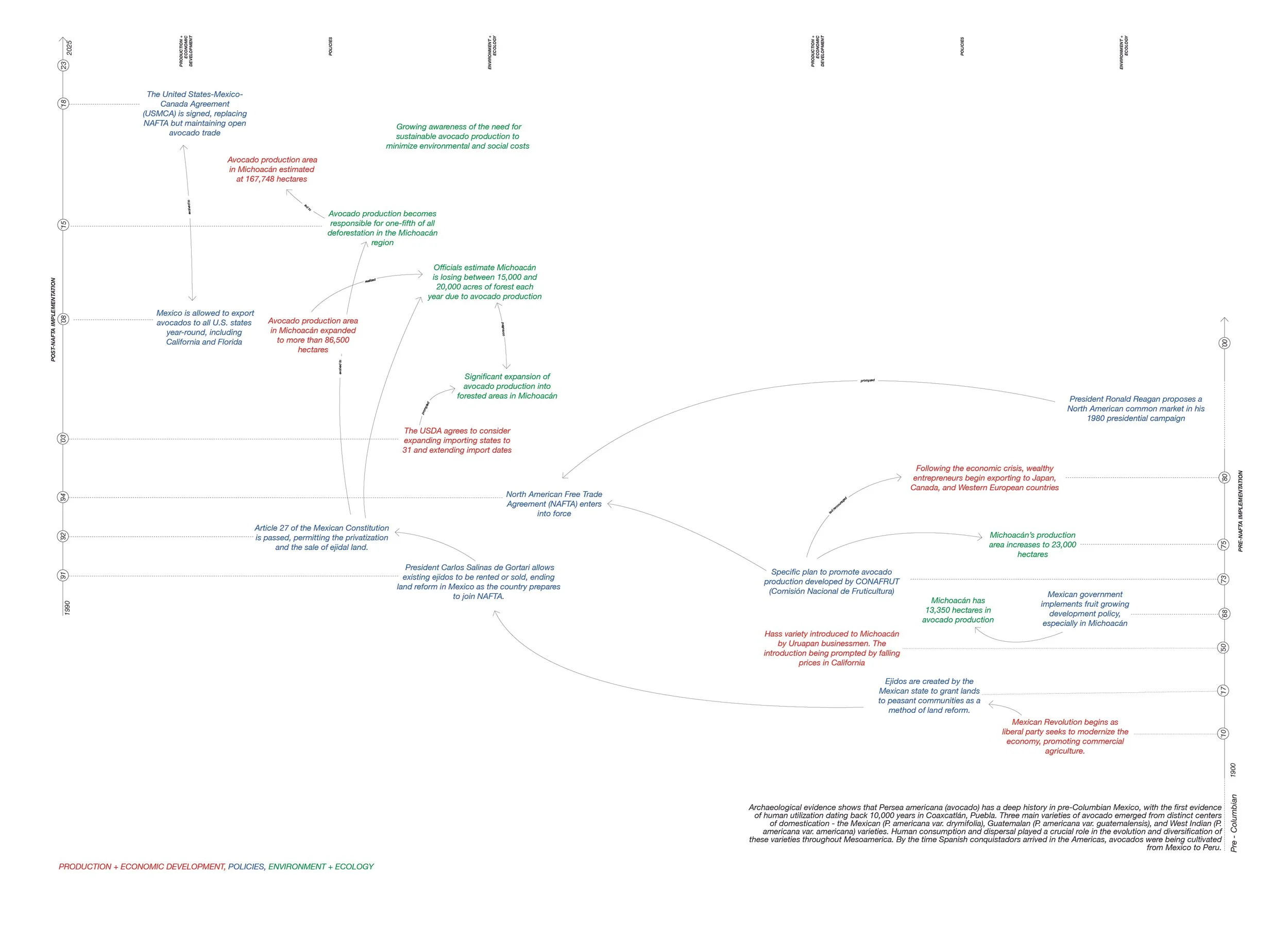
Drawing on Juan Rulfo’s Pedro Páramo, this project examines the ejido lands of Michoacán as sites of resistance where campesino histories and ecological insurgency persist against neoliberal agrarian exploitation. Much like Comala in Rulfo’s novel, a place filled with the voices of the dispossessed, Michoacán’s avocado regions reveal the externalities of deforestation, aquifer depletion, and the fragmentation of rural life. This project envisions a framework rooted in common ownership, mutual care, and collective decision-making that defines ejidos as spaces of autonomy and ecological renewal.
Recalling ancestral practices and community knowledge, the design integrates mycological systems and agroforestry networks that restore soil fertility and strengthen biodiversity. Fungal structures act as cological infrastructure and symbols of collective interdependence, connecting bodies, histories, and territories through shared resources.
The environmental focus centers on soil repair, watershed protection, and the creation of ecological corridors that counter industrial agriculture. The social strategy deepens ejido governance, builds federations of producers, and engages youth through cooperative education programs that sustain agrarian identity and local power. The economic dimension supports small-scale production, strengthens cooperative markets, and promotes economies that resist enclosure and privatization.
Through parallels of the layered and spectral form of Pedro Páramo, the project considers land a site of struggle, memory, and regeneration where collective labor organizes ecological and social liberation.
La tierra es de quien la trabaja!!
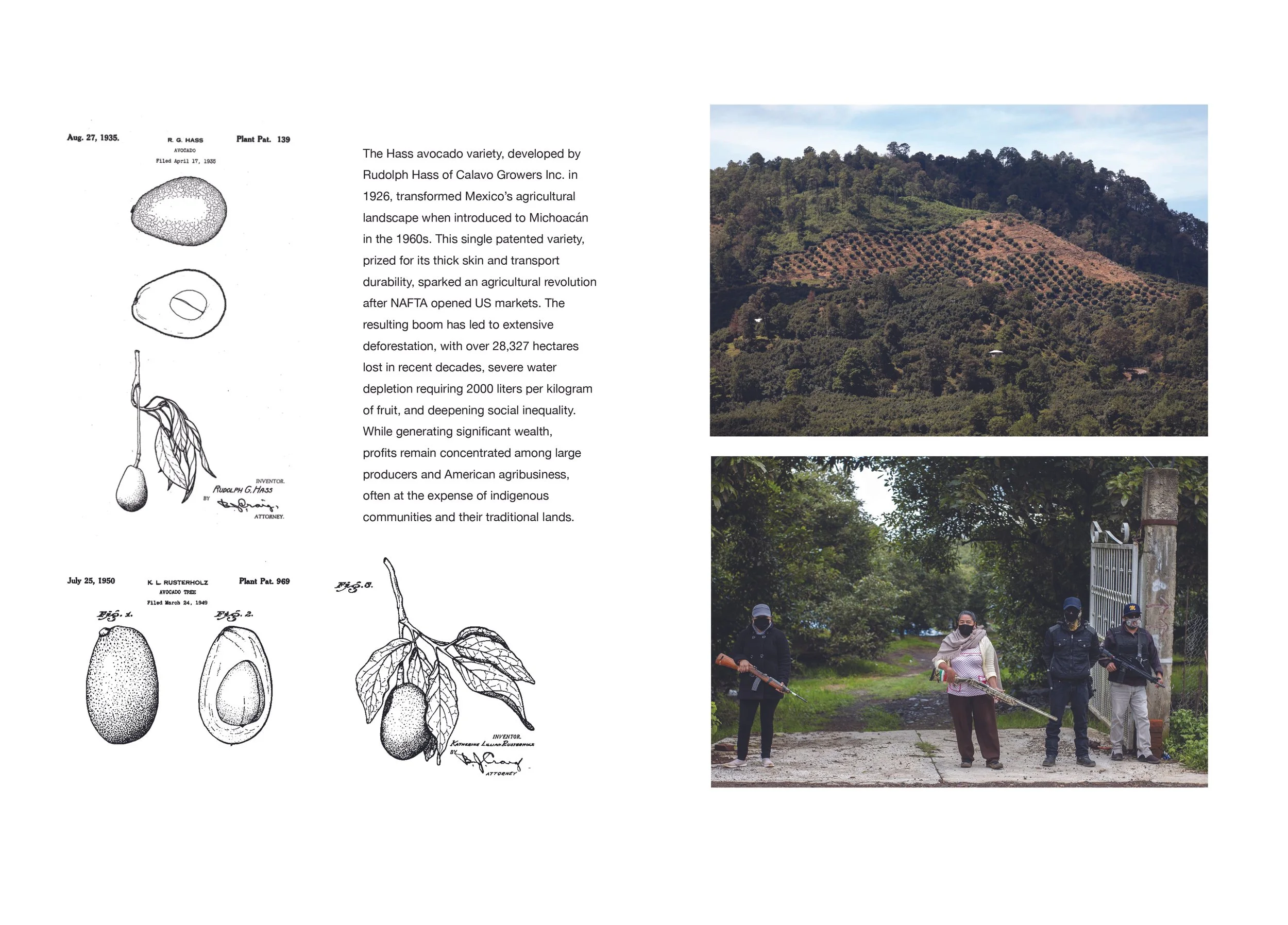
Criminal organizations, particularly the Caballeros Templarios, heavily infiltrated Michoacán’s avocado industry between 2011-2013, demanding extortion payments of approximately 2,000 pesos per hectare from producers, controlling Local Plant Health Boards, manipulating harvest schedules, and circumventing phytosanitary requirements, while simultaneously appropriating over 3,000 hectares of avocado orchards through violence and intimidation, leading to the formation of armed civilian self-defense groups (autodefensas) to combat their control over the industry.
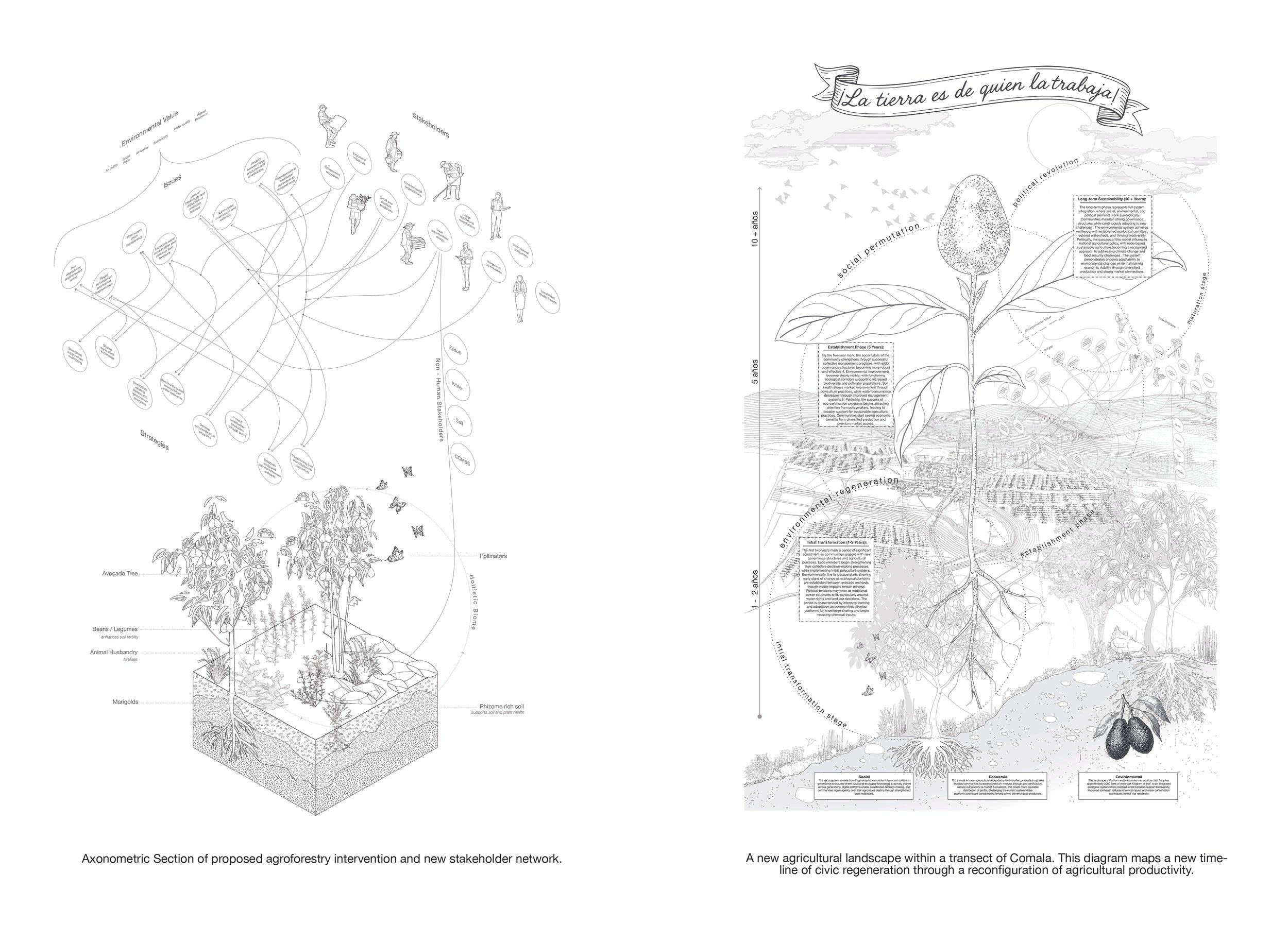
Through this synthesis, the project reframes Michoacán’s ejidos as agents of renewal. These territories are where ecological restoration and cultural memory intersect to shape resilient futures. Quien La Trabaja transforms Rulfo’s haunted landscape into a narrative of regeneration, where terrain becomes both witness and protagonist of its own recovery.